What Is a 510 Thread Battery? A Buyer's Guide
Every Cartridge on the Shelf Fits the Same Battery (Usually)
Pick up almost any cannabis vape cartridge in a legal dispensary, from any brand, in any state, and it'll screw onto almost any battery on the shelf next to it. That's not an accident and it's not one company's design winning out. It's a threading standard, and once you know what it actually means, buying a battery stops being a guessing game.
I'm Nick. I build the hardware side of Halara's vapes, and "which battery do I need" is one of the most common questions I get, right behind "why did my cart clog." The short answer is almost any 510 battery will physically work. The better answer is that "works" and "works well for your oil" are two different things, and that difference comes down to voltage, not threading.
The Quick Version
- "510 thread" is a connector standard, 10 screw threads spaced 0.5mm apart, not a brand or a specific battery model.
- Almost every 510-thread cartridge fits almost every 510-thread battery. Universal compatibility is the whole point of the standard.
- Voltage is what actually varies, and it's the setting that determines whether your oil hits smooth or harsh.
- Terpene-rich oil wants low voltage (roughly 2.0-2.6V). Distillate and high-THC oil can handle more (up to about 3.2V).
- A 510 battery only works with standalone cartridges. All-in-ones (AIOs) have the battery built in and don't take a separate one.
What "510 Thread" Actually Means
510 is a threading spec: 10 threads of screw connection spaced 0.5mm apart. It originated with early e-cigarette hardware and got adopted so widely across the vape industry, cannabis included, that it's now the default connector almost everyone builds to. When a cartridge and a battery are both described as "510 thread," it means the physical screw-on fitting is the same size and pitch on both, so one attaches to the other.
That's the entire promise of the standard: physical compatibility. It says nothing about performance. A $8 battery and a $40 battery both screw onto the same cartridge just fine. What's different is what happens after you press the button.
Voltage and Variable Temp: The Part That Actually Matters
Voltage controls how much power reaches the cartridge's heating coil, which controls how hot your oil gets. This is the setting that decides whether a hit tastes clean or scorched, and it's also the reason "510 compatible" isn't the same as "good match for your oil."
Cannabis oil isn't one uniform substance. Terpene-rich oils (live resin, resin sauce, live rosin) are more heat-sensitive, since the flavor compounds are the first thing to degrade under too much heat. Thicker oils, like some high-potency distillate, need a bit more power just to flow through the coil at all. A fixed-voltage battery treats all of that the same way. A variable-voltage battery lets you match the setting to what's actually in the cartridge, which is why most decent 510 batteries on the market today have some form of adjustable power, usually through a dial, a button-press cycle, or preset color-coded levels.
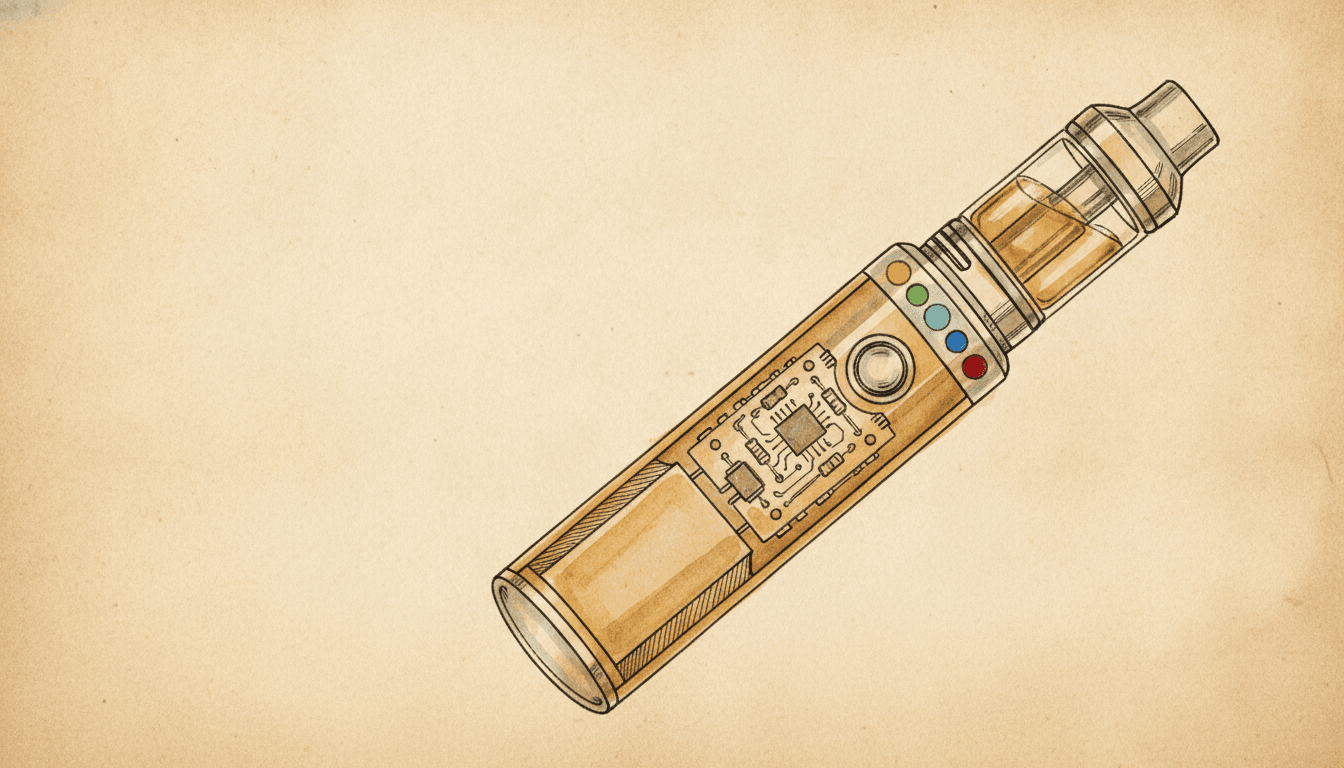
On Halara's own batteries, the four settings are color-coded for exactly this reason: 2.0V (yellow, tuned for resin sauce), 2.6V (blue, tuned for CBD blends), 3.2V (green, tuned for high-THC distillate), and 4.0V-plus (red, which we don't actually recommend, since it runs hotter than almost any cannabis oil wants). If you want the deeper mechanics of why voltage and airflow determine harshness in the first place, we wrote a full breakdown of it.
How to Pick a 510 Battery
- Match capacity to how much you actually vape. Compact batteries (roughly 350-500mAh) are lighter and less conspicuous but need daily charging. Larger batteries (700mAh and up) last longer between charges at the cost of some size and weight.
- Get variable voltage, not fixed. A single-voltage battery is cheaper, but it means every cartridge you own, thin distillate and thick rosin alike, gets hit with the same power. That's how you end up with one cart that's perfect and another that tastes burnt.
- Check the charging port. USB-C is the current standard and charges faster than older micro-USB batteries. A full charge on a compact USB-C 510 battery typically takes 1-2 hours.
- Consider how the cartridge sits when you're not using it. Standard 510 batteries leave the cartridge exposed, which means it can knock against your keys or crack in a bag. Batteries with a cartridge-enclosing design (Halara's Pocket Pal uses a magnetized click that seats the cart fully inside the body) solve for breakage and leaking in a pocket.
- Start low, adjust up. Whatever battery you land on, begin at its lowest voltage setting and only increase if the hit feels weak. It's much easier to add heat than to un-scorch oil you already burned.
Common Mistakes
Buying the cheapest battery in the display case. The threading will be 510-compliant. The voltage regulation often isn't, and a battery that can't hold a consistent voltage under draw is a common, under-diagnosed cause of harsh or inconsistent hits.
Running one voltage setting for every cartridge. If you switch between a resin sauce cart and a high-THC distillate cart, they don't want the same power. Adjust the setting when you swap carts, not just when a hit tastes off.
Ignoring the battery when a cart "goes bad." A lot of what gets blamed on a bad cartridge is actually a battery running too hot, too cold, or inconsistently. Before writing off a cart, try it on a different battery at a lower setting.
Leaving it uncharged in the cold. Lithium batteries lose capacity in cold temperatures, and a half-charged battery in a cold car can underperform even at its correct voltage setting. Keep it at room temperature when you can.
When You Don't Need Any of This
If your device is an all-in-one (AIO), meaning the cartridge and battery come sealed together as one unit, none of the battery-shopping advice above applies. There's no separate battery to buy, no voltage dial to set (the manufacturer already tuned it), and no threading to match. AIOs trade that control for simplicity. Our guide to choosing a vape cartridge covers the tradeoffs between 510 and AIO formats if you're deciding which format to buy in the first place.
What We Do at Halara
Halara sells two 510 batteries built around the voltage problem above. The Pocket Pal is our compact option: 800mAh, variable temp, USB-C, with a magnetized click design that stores the cartridge fully inside the device so it isn't rattling loose in your pocket. The Premium Big Battery is the larger-capacity option, ships with a dual charger, and covers the same four color-coded voltage settings.
Both are standard 510 thread, so they work with any cartridge on the market, not just ours, though the voltage presets are tuned specifically around what our own oil (and most cannabis oil generally) actually needs to hit clean. If you've got a drawer full of old 510 batteries that never quite got the hit right, mismatched voltage is the first thing worth checking before you blame the cart.
Frequently Asked Questions
What does 510 thread mean on a vape battery?
510 thread refers to the screw-on connection standard almost every vape cartridge and battery uses: 10 threads spaced 0.5mm apart. It's not a brand or a specific device, it's a universal fitting, which is why a cartridge from one company usually screws onto a battery from a completely different one.
Are all 510 batteries compatible with all 510 cartridges?
Physically, yes, almost universally. The threading is standardized. What can vary is performance: a cartridge built for thick, terpene-rich oil may hit harsh or clog on a battery that isn't tuned for it, and a battery running fixed high voltage can scorch oil that needs a gentler setting. Compatible doesn't always mean optimized.
What voltage should I use for a 510 cartridge?
Most cannabis oil hits smoothest between 2.0V and 3.2V. Terpene-rich oil (live resin, resin sauce, rosin) wants the low end, around 2.0-2.6V, since its flavor compounds are the first thing to burn off. Distillate and high-THC oil can handle the higher end, up to about 3.2V. Anything past 3.5-4.0V risks scorching almost any cannabis oil.
How long does a 510 battery last on one charge?
Depends on the battery's capacity and how you use it. A compact 510 battery in the 400-800mAh range typically lasts a full day of normal use and recharges in 1-2 hours over USB-C. Heavier daily use or a colder battery setting (which pulls more power per hit) will drain it faster.
Can I use a 510 battery with an All-in-One (AIO) vape?
No. An AIO has its battery built into the device itself, so there's no separate battery to attach. 510 batteries only work with standalone 510-thread cartridges, the kind you screw on and swap out. If your device is a sealed, pre-filled pen with no removable cartridge, it's an AIO, not a 510 setup.
Want more cannabis intel?
Join The Dealers Diary — weekly strain spotlights, industry news, and insider access.
Subscribe Free