Glass vs. Plastic Vape Cartridges: Why Your Cart Material Matters
The Question Nick Won't Stop Talking About
Nick has a chemical engineering degree. Most of the time that means he's optimizing extraction parameters or arguing with our hardware suppliers about tolerances. But there's one topic where the engineering background turns into something closer to a personal crusade: what your vape cartridge is actually made of.
I asked him once why he cared so much about the tank material. His answer was pretty simple. "You're heating something to 400 degrees and breathing it in. The material that's holding the oil matters. It's not a water bottle."
That stuck with me. So I started paying attention to what the rest of the industry is actually using.
What Most Vape Cartridges Are Actually Made Of
Pick up a vape cartridge from most major brands and look at the tank (the clear part that holds the oil). Odds are it's polycarbonate plastic. Some brands use ABS plastic. A few use plastic for just the mouthpiece. But the majority of cartridges on shelves right now, including brands like Stiiizy, Jetty, and Heavy Hitters, have plastic somewhere in the oil path.
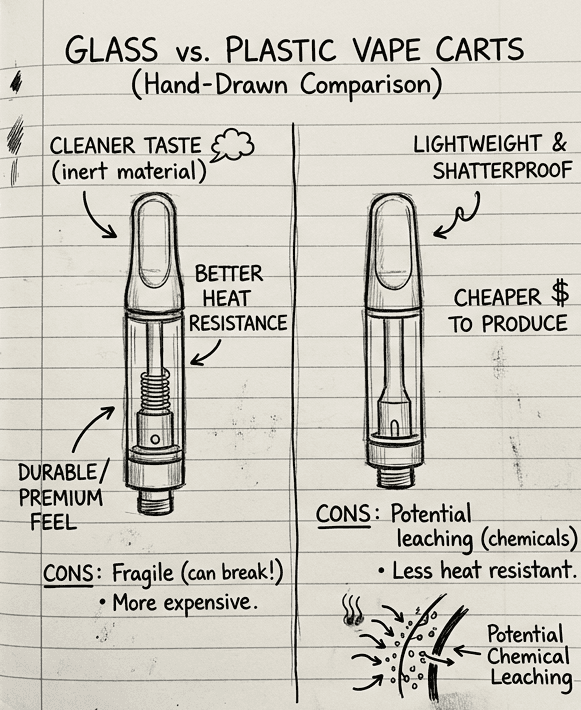
That's not because plastic is better. It's because plastic is cheaper. A polycarbonate tank costs a fraction of what a borosilicate glass tank costs. When you're manufacturing millions of units, that difference adds up fast. So most brands made the economic choice and moved on.
The problem is what happens when you heat plastic.
What Happens When You Heat Plastic Vape Carts to 400°F
This is where Nick's chemistry background becomes relevant, and where most people in the industry either don't know or don't want to talk about it.
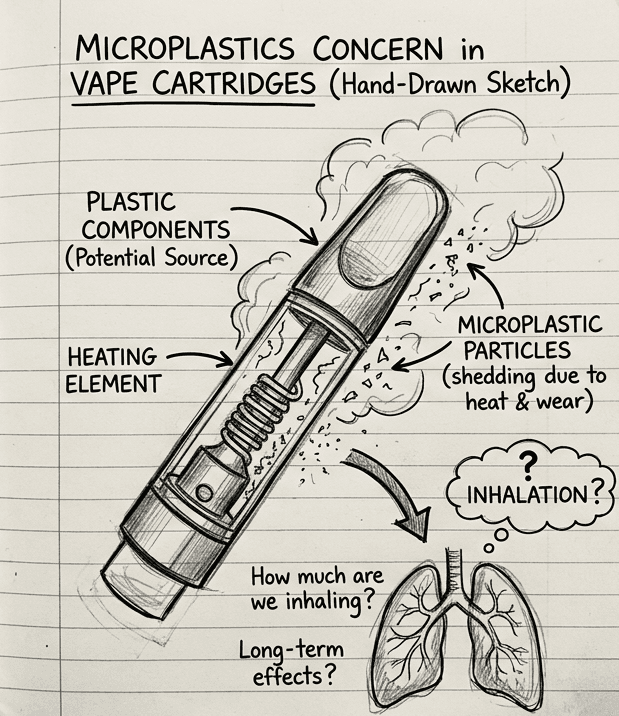
Vaping temperatures typically range from 200 to 400°F. At those temperatures, polycarbonate and ABS plastics can begin to degrade. Not melt (the melting point is higher), but degrade at the molecular level. The polymer chains start to break down, and when they do, they release compounds into the surrounding oil.
The two big concerns are microplastics and BPA.
Microplastics are exactly what they sound like: microscopic fragments of plastic that shed from the tank wall as it's repeatedly heated and cooled. Every heat cycle stresses the material. Over weeks of use, those fragments accumulate in the oil. You're not going to see them. They're measured in microns. But they're there, and you're inhaling them.
BPA (bisphenol A) is a chemical used in the production of polycarbonate plastics. It's an endocrine disruptor, meaning it can interfere with your hormonal system. The FDA removed BPA from baby bottles back in 2012. The EU restricted it further in food packaging. But somehow it's still sitting in the tank of a device that heats oil to temperatures well above what any food container would ever see.
Nick puts it bluntly: "Nobody would heat a plastic container to 400 degrees in their kitchen and then eat out of it. But that's essentially what a plastic vape cart is doing, and you're not eating it, you're inhaling it. That's a more direct route into your body than digestion."
Why Glass Vape Cartridges Are Different
Glass is inert. That's the word that matters here, and it's not marketing language. It's a chemistry term. Inert means it doesn't react with the substance it's in contact with. You can heat borosilicate glass to 500°F and it won't release anything into the oil. No microplastics, no BPA, no molecular degradation. The oil that touches the glass wall is the same oil that was put there during filling.
This is why laboratories use glass for everything. It's why pharmaceutical companies store compounds in glass. It's why Nick insisted on glass from the beginning. When you know what heat does to plastics at a molecular level, using glass isn't a luxury choice. It's the obvious one.
Ceramic Coils and Adhesives: The Other Vape Safety Questions
The tank material gets the most attention, but there are two other contact points in a cartridge that matter just as much.
Heating Elements
Most cartridges use one of two types of heating elements: metal coils or ceramic. Metal coils (typically nichrome or kanthal wire wrapped around a cotton wick) can leach trace amounts of heavy metals into the vapor over time. Chromium, nickel, and lead have all been detected in vapor from metal-coil cartridges in published studies.
Ceramic heating elements don't have this problem. Ceramic is, like glass, inert at vaping temperatures. It heats evenly, doesn't degrade, and doesn't introduce anything into the oil. It also produces a cleaner, smoother hit because there's no cotton wick to char or burn.
We use ceramic across every product we make. It costs more. It's worth it.
Adhesives
This is the one that surprised even me. A lot of cartridge manufacturers use adhesive (basically glue) to seal the tank to the base or to attach the mouthpiece. That adhesive sits in direct contact with the oil. And it gets heated every time you take a hit.
Nick showed me a competitor's cartridge under magnification once. You could see the adhesive bead running around the inside seam where the tank meets the base. That glue is touching the oil, getting heated, and potentially offgassing into what you're inhaling.
Our cartridges use no adhesives in the oil path. The glass tank, ceramic element, and metal base are assembled mechanically (press-fit) so that nothing except glass, ceramic, and medical-grade stainless steel ever touches the oil.
The Anti-Clog Thing
I know we talk about our anti-clog hardware a lot. But the reason it's worth mentioning here is that it's actually related to the material choices.
Thicker oils, especially live resin and rosin, are more prone to clogging. When a cart clogs, people pull harder, which draws more heat to the coil, which stresses the surrounding materials more. A clogged plastic cart that someone is pulling on aggressively is getting hotter than it was designed to get. That accelerates the degradation we talked about above.
Our hardware doesn't clog. We've had 1 return for a clog issue in 2 years. One. That's across hundreds of thousands of units. It's not just a convenience feature. It means the hardware is operating at the temperatures it was designed for, consistently, every time.
We wrote up the actual engineering of why most cartridges clog (and what we did to stop it) in a separate piece. Read Why Vape Cartridges Clog for the mechanics.
Why This Isn't Industry Standard
The honest answer is cost. Glass cartridges are more expensive than plastic. Ceramic heating elements cost more than metal coils. Press-fit assembly is slower and more precise than just gluing things together. Every one of these choices costs us more per unit.
In an industry where margins are tight and price competition is brutal, most brands optimize for the P&L first and figure out the hardware second. I'm not going to pretend we're immune to cost pressure. But Nick made the call early that we weren't going to put plastic in the oil path, and that decision has stuck.
The industry will probably move toward glass eventually. The same way it moved toward lab testing, away from cutting agents, and toward solventless extraction. These things take time. But if you're buying carts today, you shouldn't have to wait for the industry to catch up.
How to Check If Your Vape Cart Is Glass or Plastic
Next time you're at a dispensary, here's a quick check:
- Look at the tank. Glass has a slight weight to it and a different clarity than plastic. If it feels like a pen cap, it's probably polycarbonate.
- Check the brand's website for hardware specs. Brands that use glass and ceramic usually say so. Brands that use plastic usually don't mention the material at all.
- Look for adhesive. Hold the cart up to a light and look at the seam where the tank meets the base. If you can see a visible line of glue, that adhesive is in the oil path.
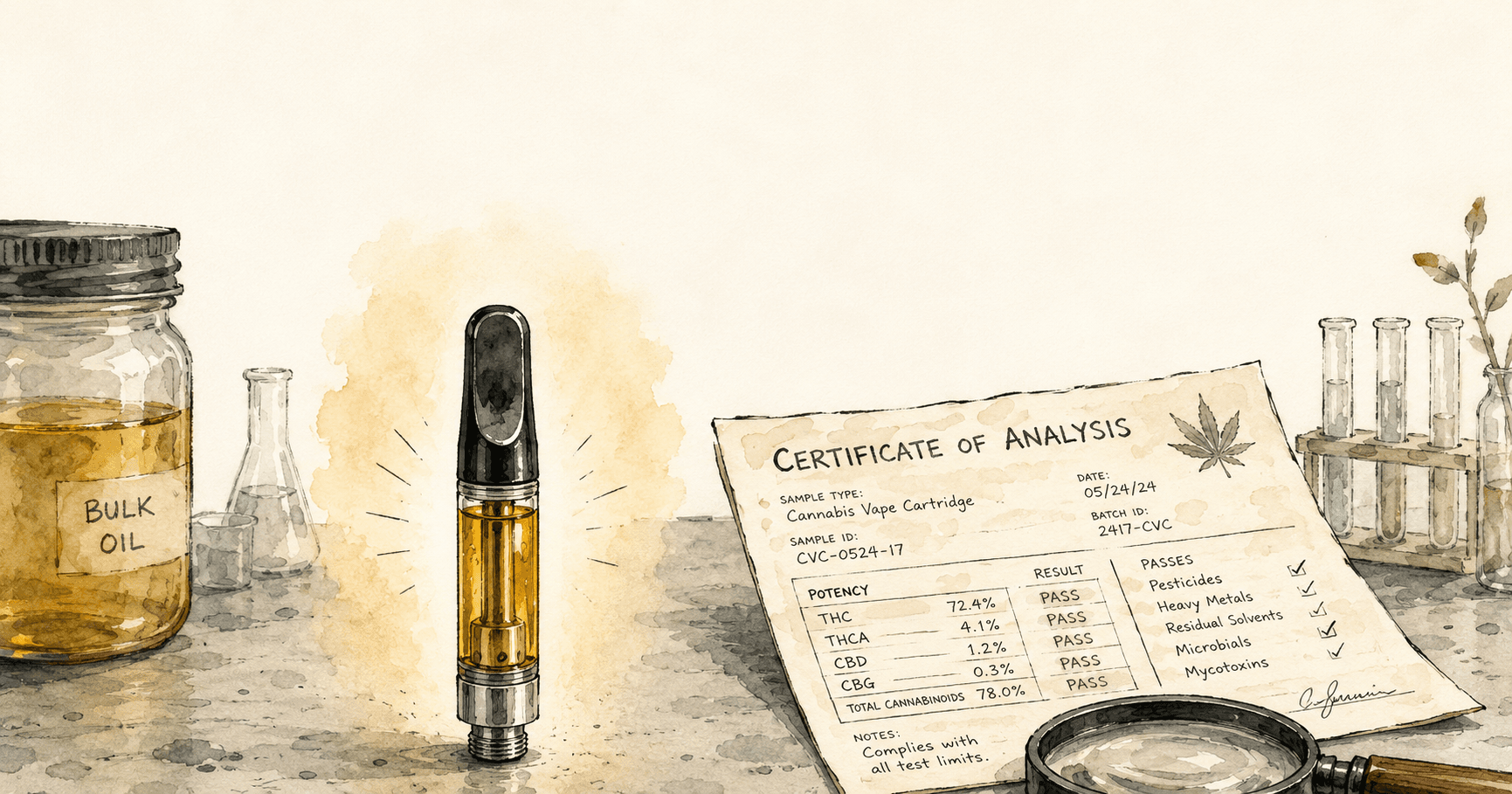
- Read the COA. Heavy metals testing on the Certificate of Analysis can tell you whether the heating element is introducing contaminants.
The Bottom Line
You spend real thought choosing between distillate, live resin, and rosin. You read COAs. You care about terpene profiles and pesticide testing and whether the oil was extracted from fresh-frozen flower or dried trim. All of that matters.
But if you put that carefully selected oil into a plastic container and heat it to 400 degrees, you're undoing some of that care. The container is part of the product. The heating element is part of the product. The way it's assembled is part of the product.
Nick has been saying this since we started. It took me a while to understand why he cared so much. Now I get it. When you know what heat does to plastic at the molecular level, you can't unknow it. Glass was never a question for us. It was the starting point.
Frequently Asked Questions
Are plastic vape carts safe?
Most plastic carts are polycarbonate or ABS, and at vaping temperatures of 200 to 400°F those plastics can degrade at the molecular level, releasing microplastics and BPA into the oil. BPA is an endocrine disruptor the FDA pulled from baby bottles in 2012. You're not melting the plastic, but you are heating it well past what any food container would ever see, and then inhaling what comes off it.
Do plastic vape carts leach chemicals into the oil?
Yes. Every heat cycle stresses the tank wall, shedding microscopic plastic fragments that accumulate in the oil over weeks of use, and polycarbonate can release BPA. You won't see the microplastics because they're measured in microns, but they're there and you're inhaling them. Inhaling is a more direct route into your body than digestion.
Why are glass vape cartridges better than plastic?
Glass is inert, a chemistry term meaning it doesn't react with what it touches. You can heat borosilicate glass to 500°F and it won't release anything into the oil: no microplastics, no BPA, no molecular degradation. The oil that touches the glass wall is the same oil that was put there during filling. That's why labs and pharmaceutical companies store compounds in glass.
What is the best material for a vape cartridge?
Borosilicate glass for the tank, a ceramic heating element instead of a metal coil, and no adhesive in the oil path. Metal coils can leach chromium, nickel, and lead into the vapor; ceramic is inert at vaping temperatures and doesn't introduce anything into the oil. Glue used to seal the tank can offgas when heated, so press-fit assembly that keeps only glass, ceramic, and medical-grade stainless steel against the oil is the cleanest build.
How can I tell if a vape cart is glass or plastic?
Look at the tank: glass has a slight weight and a different clarity, while plastic feels like a pen cap. Check the brand's website, because brands that use glass and ceramic usually say so and plastic brands usually don't mention the material at all. Hold the cart up to a light and look for a visible line of glue at the seam where the tank meets the base, which means adhesive is in the oil path.
Want the consumer-friendly version? Check out our companion guide on microplastics in vape cartridges for a quick checklist you can use at the dispensary.
Want more cannabis intel?
Join The Dealers Diary — weekly strain spotlights, industry news, and insider access.
Subscribe Free