Microplastics in Vape Cartridges: How to Tell If Your Cart Is Glass or Plastic
Microplastics in Vape Cartridges: The Part Nobody Talks About
We spend a lot of time talking about what's inside the cartridge. Is it distillate or live resin? Are there additives? What do the lab results say? All good questions. But here's one that almost nobody asks: what is the cartridge itself made of?
Because here's the thing. Most vape cartridges on the market use plastic tanks. Not glass. Plastic.
And that plastic is being heated every time you take a hit.
I started thinking about this the way I think about most things in this industry. If I were a consumer walking into a dispensary, what would I want to know? Probably that the thing I'm inhaling from multiple times a day is made from materials that can handle the heat. So I went down the rabbit hole, and what I found was worth sharing.
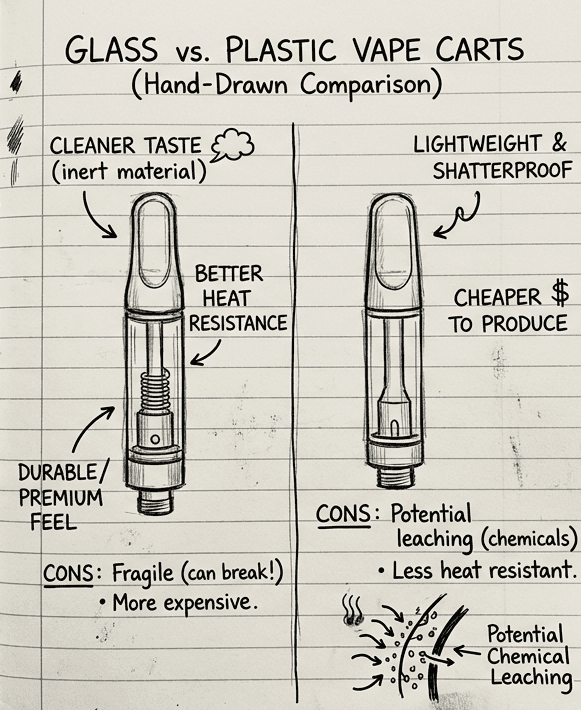
Glass vs. Plastic: How to Tell the Difference
The good news is you don't need a lab to figure out what your cart is made of. There are a few simple ways to check.
The tap test. Tap your fingernail against the tank (the clear part that holds the oil). Glass makes a sharp, high-pitched "clink." Plastic makes a dull, muted sound. It's surprisingly easy to tell once you know what to listen for.
The weight. Glass carts feel noticeably heavier than plastic ones. If you've ever held a proper glass cart next to a plastic one, you'll feel the difference immediately. Glass is dense. Plastic feels almost hollow by comparison.
Look at it. Glass has a clarity to it. It's perfectly smooth and has a slight depth when you look through it. Plastic tends to have a faint cloudiness, or sometimes you'll see very subtle seam lines from the injection molding process. Hold it up to a light source and look closely.
Check the brand's specs. Some brands openly list their hardware materials. If a brand doesn't mention what their tank is made of, it's usually plastic. Glass is a selling point, so brands that use it tend to say so.
Why Do Most Brands Use Plastic?
Short answer: money.
Plastic tanks are roughly 60% cheaper to manufacture than glass. When you're producing millions of cartridges, that cost difference adds up fast. Plastic is also lighter, which reduces shipping costs, and easier to mold at scale.
None of that is inherently wrong. Plenty of products use plastic safely. The question is whether plastic is the right material for something that gets heated to high temperatures while you inhale through it.
The Microplastics Concern
Here's where it gets interesting (and a little uncomfortable).
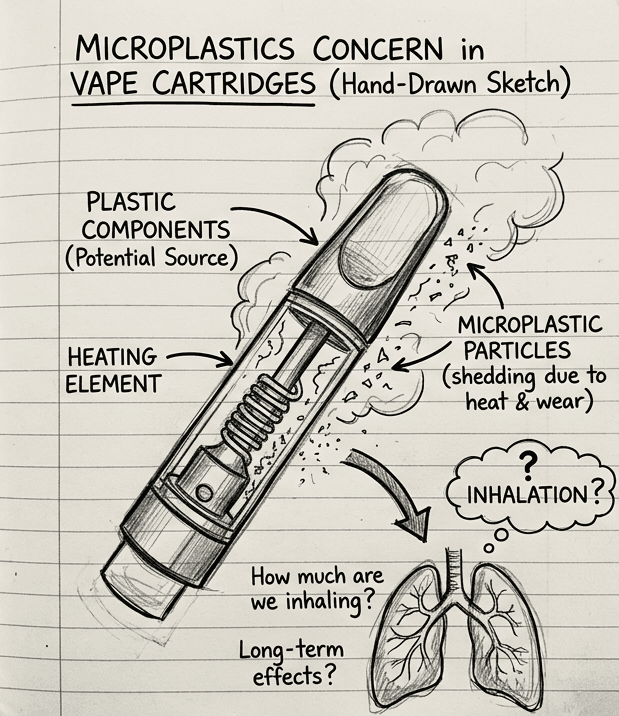
When plastic is exposed to heat, it can release microplastic particles. These are tiny fragments, sometimes microscopic, that break off and end up in whatever substance is in contact with the material. In a vape cartridge, that substance is the oil you're inhaling directly into your lungs.
We've been hearing about microplastics in water bottles and food containers for years. The research on heated plastics is pretty clear on this point. Heat accelerates the release of particles. A vape cartridge operates at significantly higher temperatures than a water bottle sitting in your car.
There's also the question of BPA and phthalates. These are chemical compounds found in many plastics that act as endocrine disruptors (meaning they can interfere with your hormones). When heated, these compounds can leach into the oil. Whether the exposure levels from a vape cart are significant enough to cause harm is something researchers are still working on, but the mechanism is well understood.
The "Medical Grade" Plastic Problem
Some manufacturers market their carts as using "medical grade" plastic. That sounds reassuring. But here's the thing. Medical grade plastic is designed to be biocompatible, meaning it's safe for contact with your body. Surgical instruments, IV tubing, implants. It's rated for those uses.
It is not rated for being heated to vaporization temperatures while you inhale through it. That's just not what "medical grade" was designed to cover. It's a real certification being applied to a use case it wasn't meant for.
Beyond the Tank: Adhesives and Heating Coils in Vape Carts
The tank material isn't the only thing worth thinking about.
Adhesives. Many cartridges use glue to bond the tank to the heating element at the base. That adhesive sits in direct contact with the oil, and it gets heated every time you take a hit. The type of adhesive matters, and most brands don't disclose what they use.
Coils. Vape coils are typically made from either metal or ceramic. Metal coils (especially lower-quality alloys) can leach heavy metals into the oil when heated repeatedly. Ceramic coils are generally considered cleaner, but quality varies. The point is that the heating element is another hardware variable that affects what you're actually inhaling.
Why This Matters Now
California's Department of Cannabis Control saw an 800% increase in product recalls in 2024 compared to the previous year. Most of those recalls were about oil quality (pesticides, contamination), which is important. But it highlights a broader trend: consumers and regulators are starting to pay more attention to what's actually in the products being sold.
Hardware quality is the next frontier. Right now, most of the regulatory focus is on the oil. The cartridge hardware itself isn't subject to the same scrutiny. That will probably change. But until it does, it's worth doing your own homework.
Your Checklist: What to Look for When Buying a Vape Cart
Here's what I'd check if I were standing at a dispensary counter right now.
- Tank material. Is it glass or plastic? Do the tap test if you can handle a display unit. Check the brand's website if you can't.
- Coil type. Ceramic coils are preferable to metal. Some brands list this on the packaging, most don't. Check their website or ask your budtender.
- Adhesive disclosure. Does the brand talk about their hardware construction at all? Brands that care about this stuff tend to be transparent about it.
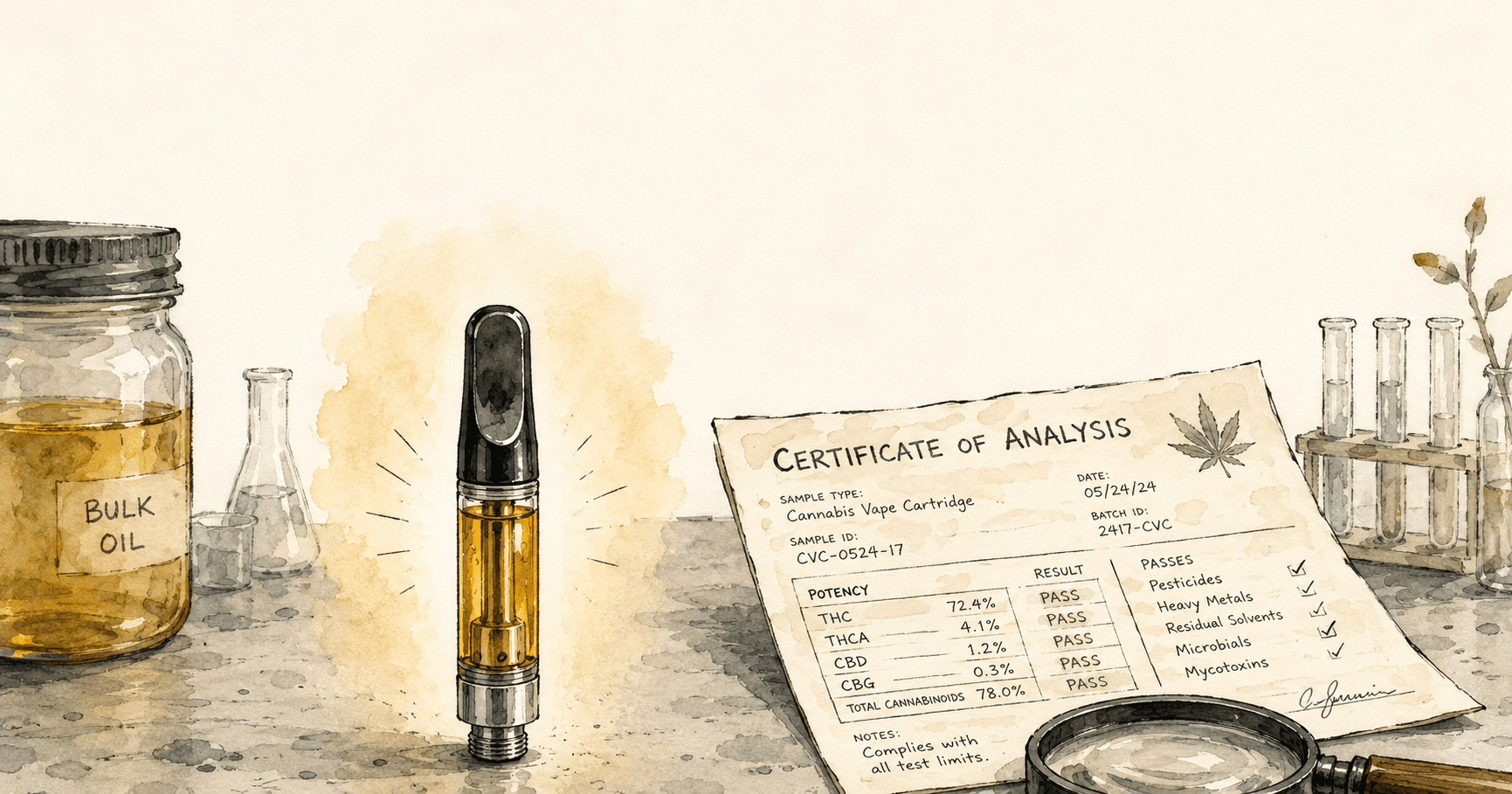
- Lab results. This is always the baseline. Full COA results should be available for every batch, covering potency, pesticides, heavy metals, and residual solvents.
- Brand reputation. Look at the DCC recall database, or our plain-English California vape recall tracker, for any brand you're considering. A clean track record matters.
- Price as signal. This isn't always true, but extremely cheap carts are more likely to cut costs on hardware. If a full gram cart is dramatically cheaper than its competitors, it's worth asking why.
What We Do at Halara
I'll be upfront about our hardware choices since I just spent this whole article telling you to ask about them.
We use glass tanks, ceramic coils, and we publish full lab results for every batch. We think hardware quality matters as much as oil quality, because both end up in your lungs. Our lab results page has batch-specific COAs you can check anytime.
The Bottom Line
Nobody's trying to scare you away from vaping. Legal cannabis products in California are still tested and regulated in ways that make them dramatically safer than the alternative. The point is that "what's inside the cart" is only half the question. The other half is "what's the cart itself made of."
Now you know what to look for. Use it next time you're shopping.
Sources
- California DCC Recall Portal. Public database of all cannabis product recalls.
- Halara Lab Results. Batch-specific COAs for all Halara products.
- Halara's Guide to Safe Vaping. Our full breakdown of what "clean" means.
For a deeper dive into the science behind microplastics and vape hardware materials, check out our companion piece on glass vs. plastic vape cartridges.
Want more cannabis intel?
Join The Dealers Diary — weekly strain spotlights, industry news, and insider access.
Subscribe Free