Cannabis Brands That Give Back: What It Costs, From One That Does
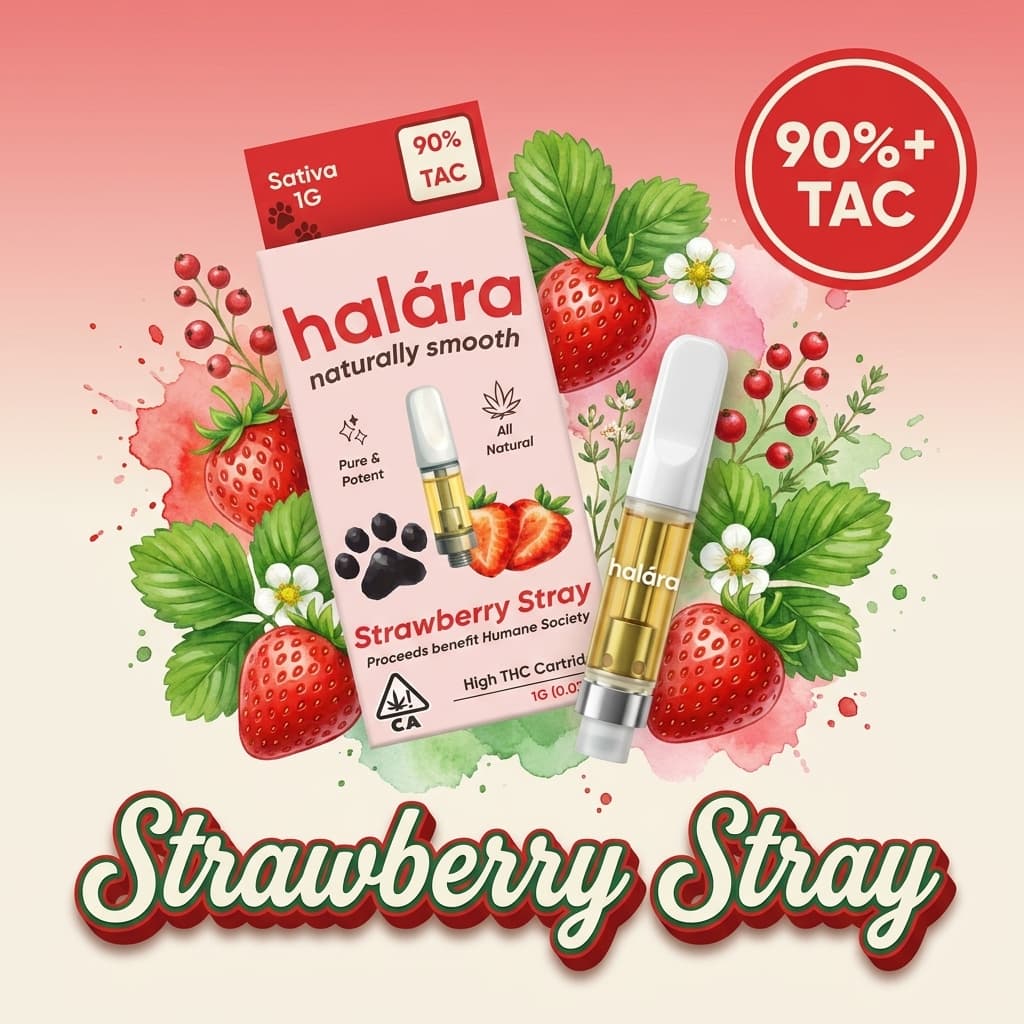
Nick ordered the packaging for a cannabis vape on April 8th. The product went on sale in August. Somewhere in between, we committed a chunk of the proceeds to an animal shelter network, and none of us had the faintest idea whether anyone would buy the thing.
Four months between the promise and the evidence. That's the gap nobody writes about when they write about cannabis brands that give back, because the press releases arrive after the fact, when the number is known and the photo op is scheduled. The decision happens way earlier, back when it's still a bet.
Everyone says they give back. Almost nobody says what it costs.
Search "cannabis brands that give back" and you'll find roundups. Good ones, mostly, from Leafly and a handful of others. What you won't find is a brand explaining the mechanics, because the mechanics are less flattering than the headline.
Here's the honest version of how this works at a small California vape company. A limited release needs custom packaging. Custom packaging has a lead time measured in months, not weeks. So the sequence runs: pick the cause, commit the money, design the box, order the box, wait, fill it, ship it, and only then discover whether the market wanted it. By the time the sales data exists, the donation is already a fact.
That's not virtue. It's just how manufacturing works. But it does mean a giving program is a real financial position rather than a marketing decision you can reverse in a bad quarter, which turns out to be the thing that separates the programs that last from the ones that don't.
What a Benefit Corporation actually obligates
Halara is a certified Benefit Corporation. That phrase gets used loosely, so here's the specific version: it's a legal structure, not a badge and not something you buy. It requires the directors to weigh stated public benefits alongside shareholder return when they make decisions.
In practice that looks less noble than it sounds. It means when Nick sits down with the packaging calendar in April, "which cause does this one fund" is on the checklist next to strain selection and hardware specs. It's a line item, not a moment of inspiration.
The reason that matters is boring and structural. A marketing budget is discretionary, which means a giving program funded out of marketing dies the first quarter things get tight. A governance obligation doesn't work that way. Nobody in this industry has had an easy three years, and the programs still standing are almost all attached to something more binding than good intentions.
The California brands running real programs
Naming names, including people who compete with us for shelf space.
Jetty Extracts runs the deepest program in California cannabis, and it isn't close. The Shelter Project started in 2014 and provides free cannabis to cancer patients facing financial hardship. Registered patients receive up to four free products a month, and the only eligibility requirement is a cancer diagnosis. As of 2026 it has donated more than $1.2 million in product to over 1,320 patients across California, Colorado, and New York. High Times covered it years ago and it has only grown since. If you want the benchmark for what a serious cannabis giving program looks like, it's this one.
Wyld is one of the largest edible brands in the country and runs an actual corporate responsibility department with a published annual impact report. Having a department and a report sounds bureaucratic, and that's the point. It means the work has a budget line and someone whose job depends on it.
Pet Releaf sits adjacent to our category rather than inside it (pet CBD, not adult-use THC), but its Rescue Releaf program has supported more than 200 shelters and rescues with close to $300,000 in product donations, which is a bigger number than most licensed cannabis brands can claim.
American Cannabis Company partners with Dr. Funky's on special-edition products where each purchase funds Pets & People Humane Society and Bella SPCA in Oklahoma. Smaller scale, same structure: named partner, defined mechanic, per-unit trigger.
What these have in common is checkable specifics. A named recipient, a stated mechanic, and a history. Any program missing all three is a sentence on an about page.
What we do, and the actual numbers
Four releases a year, each one funding a different cause.
Forbidden Roses is the Q1 release, partnered with Sweetleaf Collective, and it funds free medical cannabis for people who need it and can't afford it. It's also, awkwardly for anyone who thinks charity products are a compromise, our best-selling live resin SKU every single year and one of our two Emerald Cup Gold winners.
The Earth Day release funds One Tree Planted, at 1,000 trees planted per year here in California.
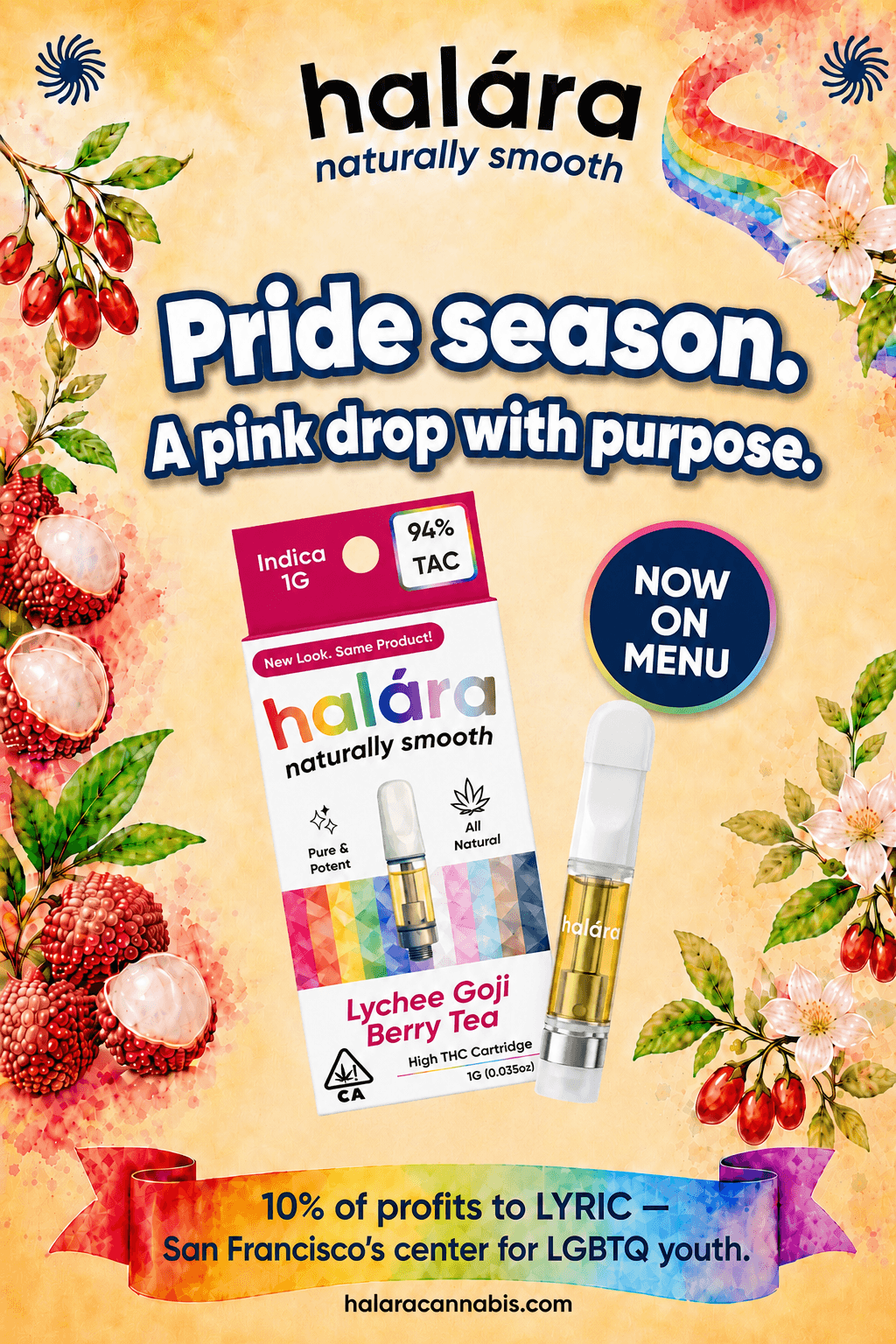
The Pride release, Lychee Goji Berry Tea, sends 10% of profits to LYRIC, the LGBTQ+ youth center in San Francisco. We wrote separately about why cannabis and San Francisco's queer history are the same story, and that release is the current-day end of it.
The Rescue Release, Mochi Paws, works with Humane Society chapters on a per-unit mechanic: each cart sold sponsors a meal for a shelter animal. Strawberry Stray is this year's continuation, and it's the one whose box got ordered on April 8th.
That's the box at the top of this page. Look under the strain name and you'll see the paw print and the line "Proceeds benefit Humane Society," which is the reason the file had to be finished in April. A claim printed on packaging isn't something you get to revise in August once you've seen how the first week sold.
The number that complicates the story
Charity releases outperform. Lychee Goji Berry Tea, our Pride release, outsold our average THC SKU by 20%, and Forbidden Roses has been the top live resin product in our catalog every year it's existed.
I've thought about why, and I don't think it's altruism at the register. My read is that a charity release forces a level of care the regular calendar doesn't. You pick a better strain because the release has to justify itself. The packaging gets more attention because it has to carry a story. Nick's strain selection gets pickier when the box has someone else's logo on it. The cause raises the bar on everything around it, and customers notice the result even when they never notice the cause.
So the drops that are hardest to plan are the ones that perform best, which is an annoying thing to learn. It argues for planning further out rather than doing fewer of them.
Where this goes wrong for us
Twice last year, it didn't happen at all.
We planned a FIFA release and a July 4th release. Neither one shipped. Not because we changed our minds about the causes, but because the planning started late and the packaging lead time ate the window. By the time the boxes could have arrived, the moment they were built for had passed.
That's the failure mode of this whole model, and it's worth stating plainly since we're the ones holding it up as a virtue. A giving program built on limited releases is only as reliable as your production calendar. Ours wasn't, twice. The three-month lead time that makes the commitment real is the same three-month lead time that kills the release when you start in month two.
We're better at it than we were. Strawberry Stray's box got ordered four months out, which is the only reason it exists at all.
How to tell a real program from a marketing one
If you care whether the brand you're buying actually does this, four questions sort it quickly.
- Is there a named recipient organization? Not "local charities." A name you can look up and call.
- Is the mechanic specific? A percentage, a per-unit donation, a product donation. "A portion of proceeds" with no portion named is not a mechanic.
- Is there a history? One release is a campaign. Four years of releases is a program. Ask what last year's was.
- Does the giving survive the bad quarters? Hardest to check from outside, but the structure is a decent proxy. Governance obligations outlive marketing budgets.
None of that requires trusting anybody. It's all checkable, which is the same standard we'd want applied to a recall record or a lab result.
Frequently Asked Questions
Which cannabis brands actually donate to charity?
In California, the programs with a verifiable track record include Jetty Extracts' Shelter Project, which has donated more than $1.2 million in cannabis products to over 1,320 cancer patients since 2014, and Wyld, which runs a corporate responsibility department and publishes an annual impact report. Halara (us) is a certified Benefit Corporation whose limited releases each fund a named cause. The test for any brand is whether the program has a named recipient organization, a defined mechanic, and a history you can check, rather than a line on an about page.
What does it mean when a cannabis company is a Benefit Corporation?
A Benefit Corporation is a legal structure, not a certification you buy or a marketing label. It obligates the company's directors to weigh stated public benefits alongside shareholder return when making decisions. In practice it means a giving commitment is a governance obligation rather than a discretionary marketing spend, so it survives quarters when the marketing budget doesn't.
Is cannabis charity marketing just greenwashing?
Sometimes. The tell is timing and specificity. A real program names the recipient organization, defines the mechanic (a percentage, a per-unit donation, a product donation), and can point to prior releases. Greenwashing describes intentions without naming an amount, a partner, or a date, and tends to appear only when there is a product to sell.
Do charity cannabis products cost more?
Not at Halara, and generally not across the category. Our charity releases price the same as the rest of the line. The cost lands on the company, not the customer, which is the part that makes it a real commitment rather than a surcharge with a cause attached.
The part I keep coming back to
The packaging was ordered in April. The donation lands in August. We committed to both before a single unit sold, and that's true of every release we've done, including the two that never made it out the door.
I don't think that makes us special. Jetty has been doing a harder version of it since 2014. But it does mean that when a cannabis brand tells you it gives back, the useful question isn't how much. It's when they decided, and what they'd have lost if nobody bought it.
Malcolm
Related Strains
Want more cannabis intel?
Join The Dealers Diary — weekly strain spotlights, industry news, and insider access.
Subscribe Free