Best Granddaddy Purple Carts in California (2026)
What is the best Granddaddy Purple cart in California?
Depends what you want. The one we'd hand someone who asked is Jetty's cryoextracted Gold cart. If you want top potency and will pay for it, Heavy Hitters. If you want the plant's own terpenes, Alpine Vapor's live resin. Big Chief is the widest-distributed legacy option, but buy it at a dispensary because it gets counterfeited. Ours is 90% THC distillate around $29, with botanical terpenes on this strain. Pick on terpene source and recall record, not the percentage.
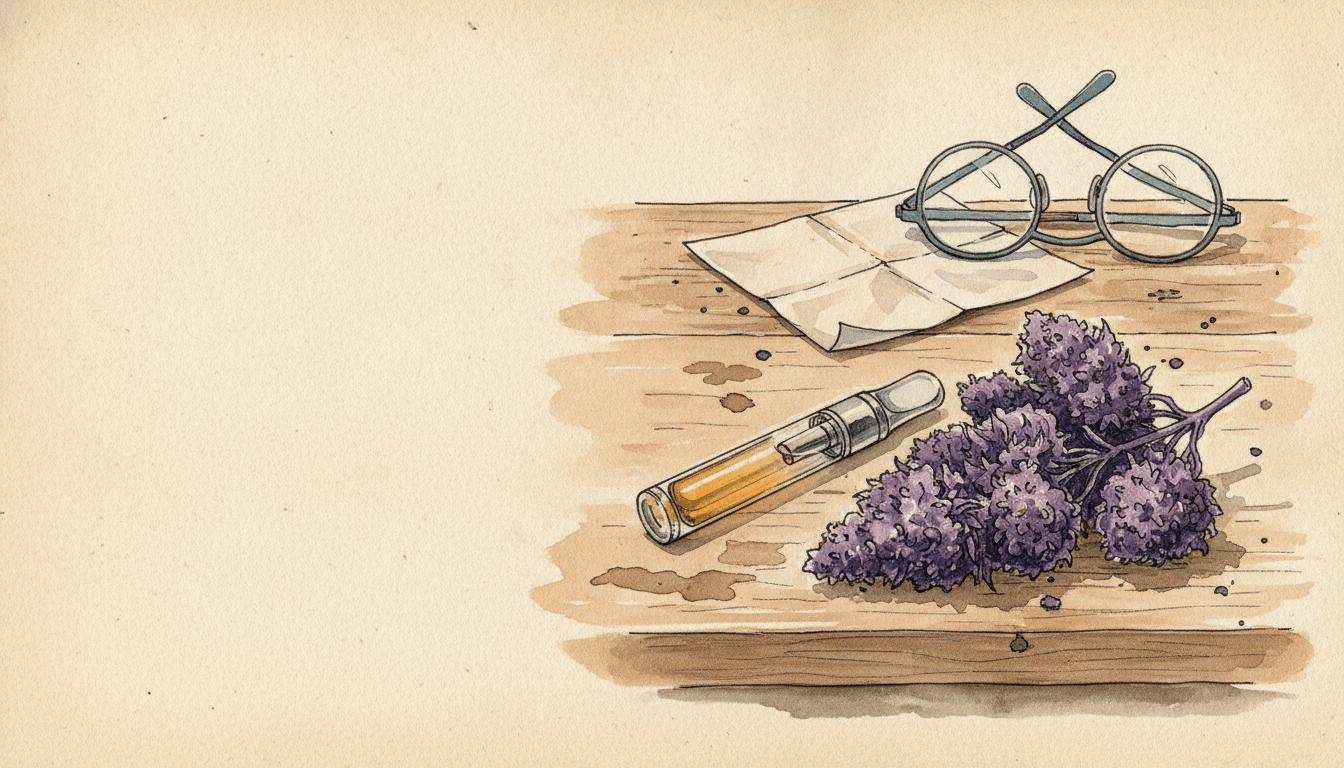
Granddaddy Purple is older than the legal cannabis market in this state. That's a strange thing to be able to say about a flavor on a vape menu.
Most strain names in this industry are marketing. Somebody crossed two things, gave it a name that sounded expensive, and the name outlived any record of what actually went into it. GDP is one of the few where you can name the breeder, the year, and the reason it exists.
I make a Granddaddy Purple cart, so I had an interest in getting the story right before I wrote anything about who makes the best one.
Where It Actually Came From
Ken Estes popularized Granddaddy Purple in Northern California around 2003. What he crossed to get there is genuinely disputed, which I find funny for a strain this famous. Leafly lists Mendo Purps, Skunk and Afghani. Plenty of people insist it's Purple Urkle crossed with Big Bud, and that version has been repeated for two decades. Both accounts are still in circulation and I'm not going to pretend one is settled.
The part most menus leave out is why. Estes was paralyzed from the waist down in a motorcycle accident and turned to cannabis afterward. He started a patient collective, and GDP came out of that work, in the Prop 215 medical era when California had legal medical cannabis and nothing resembling a regulated supply chain. We've written before about what that period was actually like, and it wasn't the tidy origin story the industry likes to tell now.
So when you buy a GDP cart in 2026, you're buying a flavor profile named after medicine somebody made for patients twenty-plus years ago, refined into an oil that didn't commercially exist at the time. I don't think that's a problem. I do think it's worth knowing, because it's a better story than most of what gets printed on a box.
What "Granddaddy Purple" Means Inside a Distillate Cart
Here's where I have to be honest about my own product category.
GDP flower averages around 17% THC. Your GDP distillate cart is 85 to 95%. Those aren't the same product and the second one isn't a stronger version of the first, it's a different thing made from it.
More to the point: distillation strips the terpenes out. Whatever grape-and-lavender character you taste in a GDP cart was put back in afterward. In ours it's botanical terpenes on this strain, same as most of our distillate, with cannabis-derived blended in on a few others. That's true of nearly every distillate GDP on the shelf, and it's why the same strain name from two brands can taste like two unrelated products. The longer version of that is here.
None of which makes distillate bad. It makes the strain name a flavor target rather than a lineage claim, and once you know that, you shop differently. You stop asking "is this real GDP" and start asking "did this brand hit the profile well, and what else is in the cart."
What Makes a Good GDP Cart
- The terpene source is stated. Cannabis-derived or botanical. On a strain sold almost entirely on its grape character, a brand that won't say is making a choice.
- It's actually indica-forward. GDP should land relaxed and sleepy. If a cart labeled GDP feels bright and alert, the formulation missed, whatever the box says.
- Batch-specific COA you can open. The batch number on the box appears on the document, or it's decoration.
- Clean on the state recall portal. Ten seconds, free, and California is one of the only places that gives it to you.
- Bought from a dispensary. This matters more on GDP than on obscure strains, for reasons in the counterfeit section below.
- Hardware that empties. A cart that dies with oil in it cost more than the pricier one you'd have finished.
The Brands Making It
Unlike some strains, GDP has real competition in California, which is most of why I picked it to write about.
How these five got on the list, since that's a fair thing to ask of anybody publishing a "best" anything: each one holds a California license, each one has a Granddaddy Purple cart you can actually find on a licensed dispensary or delivery menu right now, and each one has enough distribution that you have a realistic chance of walking into a shop and seeing it. I left off a couple of brands that turned up in search results but only appeared on a single delivery menu, because putting them next to Jetty would have implied a scale that isn't there. That's the part most lists skip, and it's the part that makes them useless.
Heavy Hitters
The high-potency option. Their Ultra Extract line is one of the few that prints a purity figure on the package, and the GDP runs sweet berry with grape underneath. Family-owned since 1996, which in this industry is close to geologic time. 510 thread, CCELL ceramic.
The catch: priced well above the roughly $18 the state averages. You're paying for the potency and the track record. No recall found on the DCC portal, records reviewed July 27, 2026.
Big Chief
An LA legacy brand, widely distributed, 90%+ THC with strain-specific terpenes. If you've been buying carts in California for years you've seen these everywhere.
The catch: the brand's own popularity. Big Chief is among the most counterfeited names in the category, which is a problem created by counterfeiters rather than by Big Chief, but it lands on you at the counter anyway. Buy it from a dispensary, not from a website. No recall found on the DCC portal, records reviewed July 27, 2026.
Alpine Vapor
The different-oil option. Their GDP is live resin rather than distillate, so the terpenes are the plant's own instead of reintroduced. Also sold as a smaller disposable, which is unusual in a market that mostly does 1 gram.
The catch: it's a different product at a different price, and if what you want is potency per dollar, live resin isn't the value play. No recall found on the DCC portal, records reviewed July 27, 2026.
Jetty Extracts
The one I'd hand somebody who asked. Jetty's Granddaddy Purps comes as a 0.5g or 1g Gold cartridge, 510 thread, with the wood tip they're known for. The oil is cryoextracted, which is a genuine process difference rather than a marketing word: extracting cold preserves more of the volatile terpenes instead of cooking them off. They also source from small farms and triple-test, and they're one of the few brands in this state that has kept a consistent identity for years instead of chasing whatever format is selling.
The catch: you pay for it, and the 0.5g is easy to finish faster than you meant to. No recall found on the DCC portal, records reviewed July 27, 2026.
Halara (ours)
90% THC distillate as a 510 cartridge and a rechargeable all-in-one, dual airflow, hardware built specifically against clogging. Myrcene, Pinene and Caryophyllene, grape and lavender, and it's genuinely a nighttime cart rather than a mellow daytime one. Near $29 on most menus, discounted below that fairly often, in roughly 300 California dispensaries. Batch-specific COA behind a QR code. We also carry it in Washington and New York.
The catch: distribution, still. Heavy Hitters and Big Chief are in more doors than we are. And the terpenes are botanical on this strain, which I'd rather tell you than have you find out.
The Counterfeit Problem Is Worse on Famous Strains
Something worth understanding about GDP specifically: a strain name that's been famous for twenty years is exactly what a counterfeit operation wants.
Empty branded cartridge packaging for well-known brands sells in bulk online for pennies a unit. Fill it with whatever, print a famous strain on it, and it looks like the real thing to almost anybody. This isn't a knock on any licensed brand, it's what happens to names people recognize, and GDP has been recognizable since before dispensaries had to test anything.
The defense is boring and it works. Buy from a licensed dispensary. A licensed product has a state license number you can find, a COA tied to your actual batch, and it did not arrive at your house in the mail, because licensed cannabis cannot be mailed to you.
What I'd Actually Do
If you want the plant's real terpene profile, get the live resin version and pay for it. If you want potency per dollar and you like the grape profile, distillate is the correct choice and there's no shame in it, ours included.
If you're choosing between distillate GDPs, the tiebreakers are terpene source, whether the hardware finishes the gram, and whether the brand shows up on the recall portal. Not the percentage. Refining is what pushes the percentage, so in this category it's measuring process, not experience.
And if you find yourself on a website that will ship a GDP cart to your door, remember that the thing you like about this strain is a story from a Prop 215 patient collective, and the thing you're being sold is a printed box.
Frequently Asked Questions
What is the best Granddaddy Purple cart in California?
Depends what you're optimizing for. Jetty makes the one most people would call the best outright, cryoextracted with a 510 wood tip. Heavy Hitters runs the highest-potency distillate and charges for it. Alpine Vapor makes a live resin version if you want the plant's own terpenes instead of reintroduced ones. Big Chief is the widest-distributed legacy option. Ours is 90% THC distillate at around $29 in about 300 stores. What separates them is terpene source, hardware, and recall record, not the percentage on the box.
Who created the Granddaddy Purple strain?
Ken Estes popularized it in Northern California around 2003. He'd been paralyzed from the waist down in a motorcycle accident and turned to cannabis, then started a patient collective in the Prop 215 medical era. The exact cross is disputed: Leafly lists Mendo Purps, Skunk and Afghani, while a widely repeated account says Purple Urkle crossed with Big Bud. The breeder and the year are documented, which is more than most strain names can claim.
Is Granddaddy Purple indica or sativa?
Indica, and unusually consistently so. Every candidate parent in both competing lineage stories is indica-leaning, and nearly every producer sells it as a nighttime strain. Ours runs Myrcene, Pinene and Caryophyllene with grape and lavender on the flavor, and the effect lands relaxed and sleepy rather than merely mellow.
Why is my Granddaddy Purple cart 90% THC when the flower is 17%?
Because they're different products. GDP flower averages somewhere around 17% THC; a distillate cart is refined oil, so 85 to 95% is normal for the format. The higher number doesn't mean a stronger experience in any linear way. A 2020 JAMA Psychiatry study found blood THC differed enormously between flower and concentrate users while self-reported high and impairment came out about the same.
Are Granddaddy Purple carts counterfeited?
The strain name is one of the most copied in cannabis, because it's been famous for twenty years and everyone recognizes it. Empty branded cart packaging for well-known brands is sold in bulk online for pennies a unit. That's not an accusation against any licensed brand, it's a fact about what counterfeiters do with famous names. Buying from a licensed dispensary rather than a website is the entire defense.
Where can I buy Granddaddy Purple carts in California?
Ours is available as a 90% THC 510 cartridge and a rechargeable all-in-one across roughly 300 California dispensaries, and we also carry it in Washington and New York. Find the nearest shop through the store locator at halaracannabis.com/find. Other licensed brands carrying GDP turn up on dispensary and delivery menus.
Sources
- California DCC Recall Portal: every cannabis recall in the state, searchable by brand
- California DCC licensee search: confirm any brand or retailer holds an active state license
- Leafly interview with Ken Estes: the breeder on GDP's origins
- Bidwell et al., JAMA Psychiatry, 2020: concentrate potency versus actual intoxication and impairment
- Halara recall tracker: our compiled version of the DCC vape record, us included
Recall status reflects DCC records reviewed July 27, 2026. "No recall found" means what it says and isn't a permanent guarantee. Competitor product details come from licensed California dispensary and delivery menus and can change without notice. Check any brand yourself before you buy.
Related Strains
Want more cannabis intel?
Join The Dealers Diary — weekly strain spotlights, industry news, and insider access.
Subscribe Free