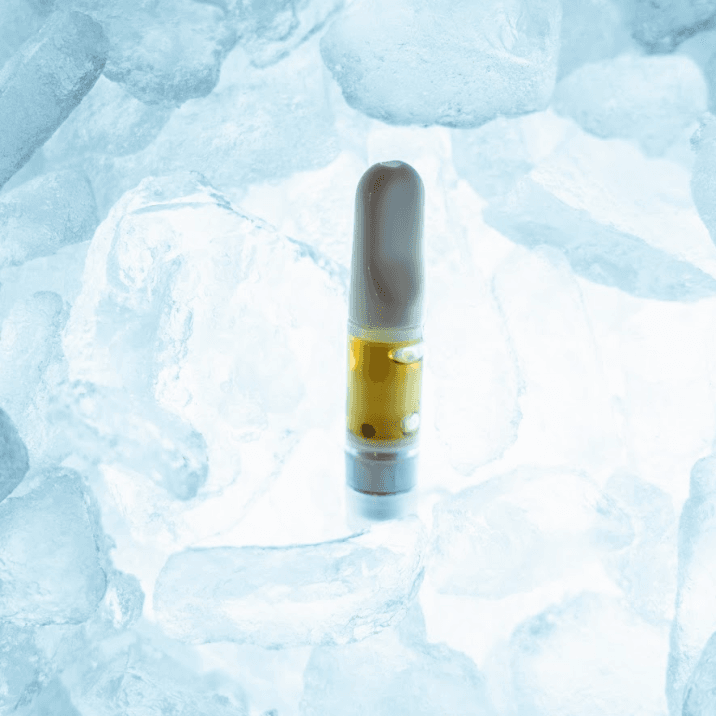
What Is Live Rosin? How It's Made & Why It Costs More

What Is Live Rosin?
Live rosin is a solventless cannabis concentrate made by pressing ice water hash that comes from fresh, flash-frozen flower, using only ice, water, heat, and pressure. No butane. No propane. No CO₂. No ethanol. The plant goes from harvest to concentrate without ever touching a chemical solvent.
That's the whole story, and it's also why live rosin sits at the top of the solventless pyramid. It's the cleanest, most flavorful version of a cannabis concentrate that exists, and the process is unforgiving enough that very few brands actually get it right.
If you've spent any time at a dispensary counter recently, you've probably seen prices on live rosin carts and live rosin jars that look like a mistake. They aren't. The premium is real. By the end of this article you'll know exactly what you're paying for and how to tell whether the product in your hand is the real thing.
Live Rosin vs. Rosin (The Important Distinction)
Regular rosin and live rosin are not the same thing, even though the names get used interchangeably in plenty of dispensaries. The difference is the starting material, and it changes everything downstream.
- Rosin starts with dried, cured flower or hash made from dried flower. The plant goes through a normal drying and curing process before extraction.
- Live rosin starts with fresh-frozen flower that's been turned into ice water hash, then pressed. The plant is never dried.
The freezing step is the whole game. Cannabis terpenes (the volatile aromatic compounds responsible for flavor and a lot of the strain-specific effect) start degrading the moment a plant is cut. Research published in the Journal of Cannabis Research found that air-drying cannabis for as little as one week can cause significant terpene losses, with monoterpenes like myrcene seeing up to 55% degradation over months of storage. Flash-freezing within minutes of harvest stops that clock. What survives into the concentrate is what was actually in the living plant.
If a brand is selling something labeled "live rosin" but they can't tell you whether the source flower was fresh-frozen, they're probably selling regular rosin with better marketing.
One thing people get wrong about live rosin: it's not pressed fresh-frozen flower. The flower has to be turned into ice water hash first, and the hash is what goes into the press. Pressing fresh-frozen flower directly produces a different (and noticeably lower-quality) concentrate. Real live rosin always goes through the ice water hash step in the middle, no shortcuts.
How Live Rosin Is Made
The process is more involved than any other concentrate, which is part of why it costs what it costs. Here's what actually happens.
Step 1: Harvest and Flash-Freeze
Flower is cut from the plant and immediately put on dry ice or into a deep freezer, usually within minutes of harvest. No drying. No curing. The whole point is to preserve the trichomes (the wax-enclosed glandular heads that contain up to 90% of the plant's cannabinoids and terpenes) in their original state.
Step 2: Ice Water Hash
The frozen flower is agitated in ice water. The cold makes the trichomes brittle, the agitation breaks them off the plant material, and they sink while the leaves and stems float. The trichomes get collected through a series of progressively finer mesh screens (typically 25 to 220 microns) and then dried into hash.
Step 3: Press
The hash is loaded into food-grade parchment between heated rosin press plates. The presses run at carefully controlled temperatures and pressures. According to industry technical references, press temperatures typically sit between 160 and 200°F, with the lower end of that range preserving more volatile terpenes. Pressure runs anywhere from 300 to 1,500 PSI depending on the material. The trichomes melt under heat and pressure, the rosin flows out onto the parchment, and the plant matter stays behind.
Step 4: Test
Like any licensed concentrate, every batch is lab tested for potency, pesticides, heavy metals, and microbial contamination. If you're buying from a California dispensary, this step is mandatory. If you're buying from anywhere else, ask to see the COA.
That's it. Water, ice, heat, pressure. The simplicity is the point.
Why Fresh-Frozen Matters: The Terpene Question
The reason fresh-frozen extraction commands a premium has nothing to do with marketing and everything to do with chemistry.
Cannabis terpenes are volatile organic compounds. They evaporate easily, they oxidize when exposed to air, and they degrade with heat and time. The reason a freshly harvested cannabis plant smells dramatically different from the same plant a month later isn't your imagination. The terpene profile is literally changing as the plant cures.
Air-drying cannabis is the standard process for flower destined for jars and pre-rolls because some terpene loss is acceptable in exchange for a smokable, shelf-stable product. But for concentrates, where the entire goal is preserving the plant's flavor and effect at maximum fidelity, drying becomes a problem. Research summarized in Cannabis Science and Technology has documented that fresh-frozen extraction (whether solvent-based or solventless) captures a fundamentally different terpene profile from cured-extract products. The volatile monoterpenes, which carry most of the strain-specific aromas, survive the freeze where they wouldn't survive the cure.
Live rosin gets this benefit and adds a second one. By avoiding solvents entirely, it skips the chemical residues, the post-extraction purging step, and the small risk that any trace of butane or propane ends up in the final product. The trade-off is a more labor-intensive process with lower yields, which means a higher price.
Live Rosin vs. Live Resin vs. Distillate
This is the question we get most often. Here's a clean breakdown.
| Live Rosin | Live Resin | Distillate | |
|---|---|---|---|
| Starting material | Fresh-frozen flower | Fresh-frozen flower | Dried/cured flower |
| Solvents used | None (water and pressure only) | Butane or propane | Ethanol or CO₂ |
| Terpenes | Original, preserved | Original, preserved | Stripped, often added back |
| THC | 70-85% typically | 70-85% typically | 85-95% typically |
| Flavor | Closest to flower | Very close to flower | Tastes like added flavor |
| Cost | Highest | Mid-to-high | Lowest |
Live resin and live rosin are both fresh-frozen, full-spectrum concentrates. Both preserve the original terpene profile. The difference is what you use to extract them. Live resin uses hydrocarbon solvents (butane or propane), which are stripped out before the product reaches the shelf but were involved in the process. Live rosin uses no solvents at all.
For most people, both deliver a noticeably different experience than distillate. The choice between live rosin and live resin usually comes down to whether you specifically want a solventless product. Some consumers prefer the principle of no chemicals; others don't care as long as the residual solvent test is clean. Both are valid positions. We make and sell both because the choice should be the customer's, not ours.
If you want a fuller comparison including resin sauce, we wrote a dedicated breakdown.
How Much THC Is in Live Rosin?
Live rosin typically tests in the 70-85% THC range. That's lower than distillate (often 85-95%) and about the same as live resin. But raw THC percentage is the wrong way to judge live rosin. Because it preserves the plant's original terpenes and minor cannabinoids, live rosin often feels stronger than its THC number suggests, the entourage effect doing real work. Plenty of people who switch from high-THC distillate to a mid-80s live rosin report a more intense, more dimensional experience at a lower number on the label.
The Forms of Live Rosin
Live rosin comes out of the press as a sticky, semi-solid material. From there, processors can take it in several directions depending on the consistency they want.
- Live rosin badder is whipped to a soft, creamy consistency. Easy to handle, popular for dabbing.
- Live rosin jam is a looser, more terpene-rich form, often with visible THCA crystals suspended in it.
- Live rosin sauce has separated into liquid terpenes and crystalline THCA, which gets recombined for use.
- Live rosin diamonds are isolated THCA crystals from a sauce separation, sometimes sold separately or with the terpene fraction added back.
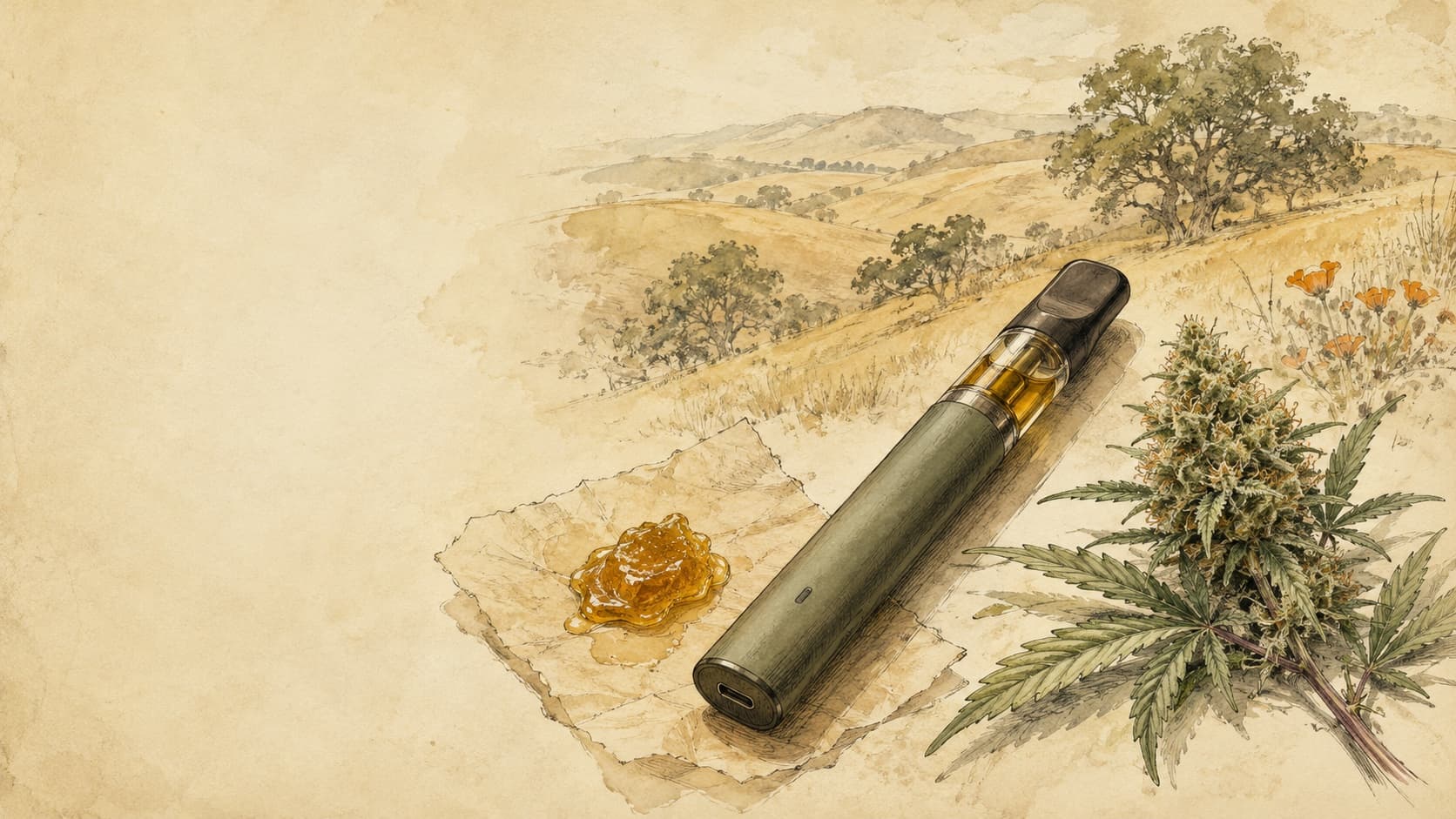
- Live rosin vape carts use a specific viscosity-controlled version designed to flow through a cartridge atomizer without clogging.
The vape cart category is the hardest to do well, which is why most "rosin" vape carts you see on the market aren't actually pure rosin. We wrote a whole post on that because the issue is widespread and the labeling rules are weak.
Live Rosin in a Vape Cart
Putting live rosin into a 510 cartridge or an AIO is harder than it sounds. Pure live rosin is too viscous and too unstable at room temperature for most cartridge hardware. The terpene profile that makes live rosin special is also what makes it unpredictable in a heated atomizer. A cart that runs too hot will burn off the lighter terpenes; one that runs too cool will clog within a few hits.
Most rosin carts on the market solve this problem by cutting the rosin with distillate, MCT oil, or other thinning agents. That's how you get a "rosin" cart at distillate prices. It's also a different product than what's on the label.
Pure live rosin in a cart requires hardware specifically designed for higher-viscosity oil. Glass tank, ceramic coil, controlled wick porosity. Then it requires the kind of QC discipline that catches a clog before it ships. It's expensive to do correctly, and there's no shortcut.
If you want the deeper version of how this works, Nick wrote a piece on what actually goes into producing one of our rosin AIOs. The short version: it takes about twice as long as a distillate cart and the yield is lower, which is why a real solventless cart costs what it costs.
Why Live Rosin Costs More
The math is unforgiving.
A live rosin run starts with significantly more fresh flower than a distillate run because solventless extraction has lower yields. You also need cold storage for the fresh-frozen material, ice and filtered water for the wash, freeze dryers to dry the hash without losing terpenes, and quality presses with precise temperature control. None of that is needed for a distillate operation.
Then there's the labor. A skilled solventless extraction artist is doing real craft work. The best ones are paid like it, and the difference between a great press and a mediocre press shows up in the final product immediately.
Stack it all up and you're looking at a finished product that costs three to five times more per gram to produce than distillate. That cost shows up at the dispensary counter. If you see a "live rosin" cart priced like a distillate cart, something is off. Either it isn't really live rosin, or someone is cutting corners somewhere in the process. Both possibilities are bad for the person buying it.
How to Identify Quality Live Rosin
Not every product labeled "live rosin" is the real thing. Here's how to tell.
- Single-strain. Real live rosin is usually strain-specific because the flavor comes from the plant itself. If a product is labeled "live rosin blend" with no strain listed, ask questions.
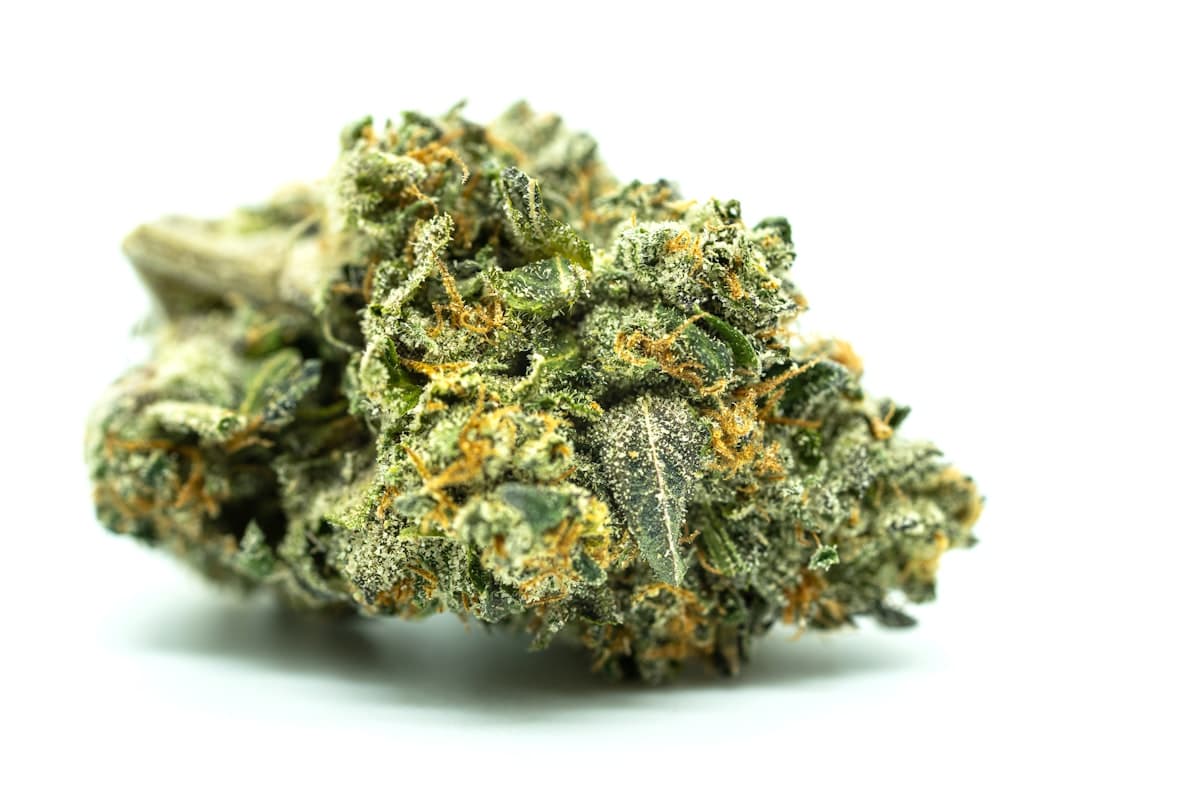
- Color and consistency. Quality live rosin ranges from light blonde to amber. Very dark or muddy product can indicate older starting material, bad pressing technique, or contamination.
- Single-source flower. The brand should be able to tell you what cultivar the rosin was made from, when it was frozen, and ideally who pressed it. Vagueness is suspicious.
- Full COA published. Every legitimate brand publishes lab results. If you can't find them on the website or via a QR code on the packaging, that's a red flag. We publish every batch.
- No additives. Pure live rosin needs nothing added. If the ingredients list anything beyond the rosin itself (especially in a cart), it's not pure.
- Aroma. Live rosin should smell loud. Like, hits-you-from-across-the-room loud. If it's flat, the terpenes weren't preserved.
How to Store Live Rosin
Live rosin is the most temperature-sensitive concentrate on the market. The same volatile terpenes that make it special are the ones that disappear if you store it wrong.
For long-term storage of jars and badders, keep live rosin below 40°F. A regular refrigerator works. A freezer is better for very long storage but introduces moisture risk when you take it out.
For vape carts, room temperature is fine for active use, but avoid leaving the cart in a hot car or direct sunlight. Heat accelerates terpene degradation, and once it's gone, it's gone.
What We Do at Halara
Since we're in the solventless business and just made an argument about quality, it's worth saying what we do.
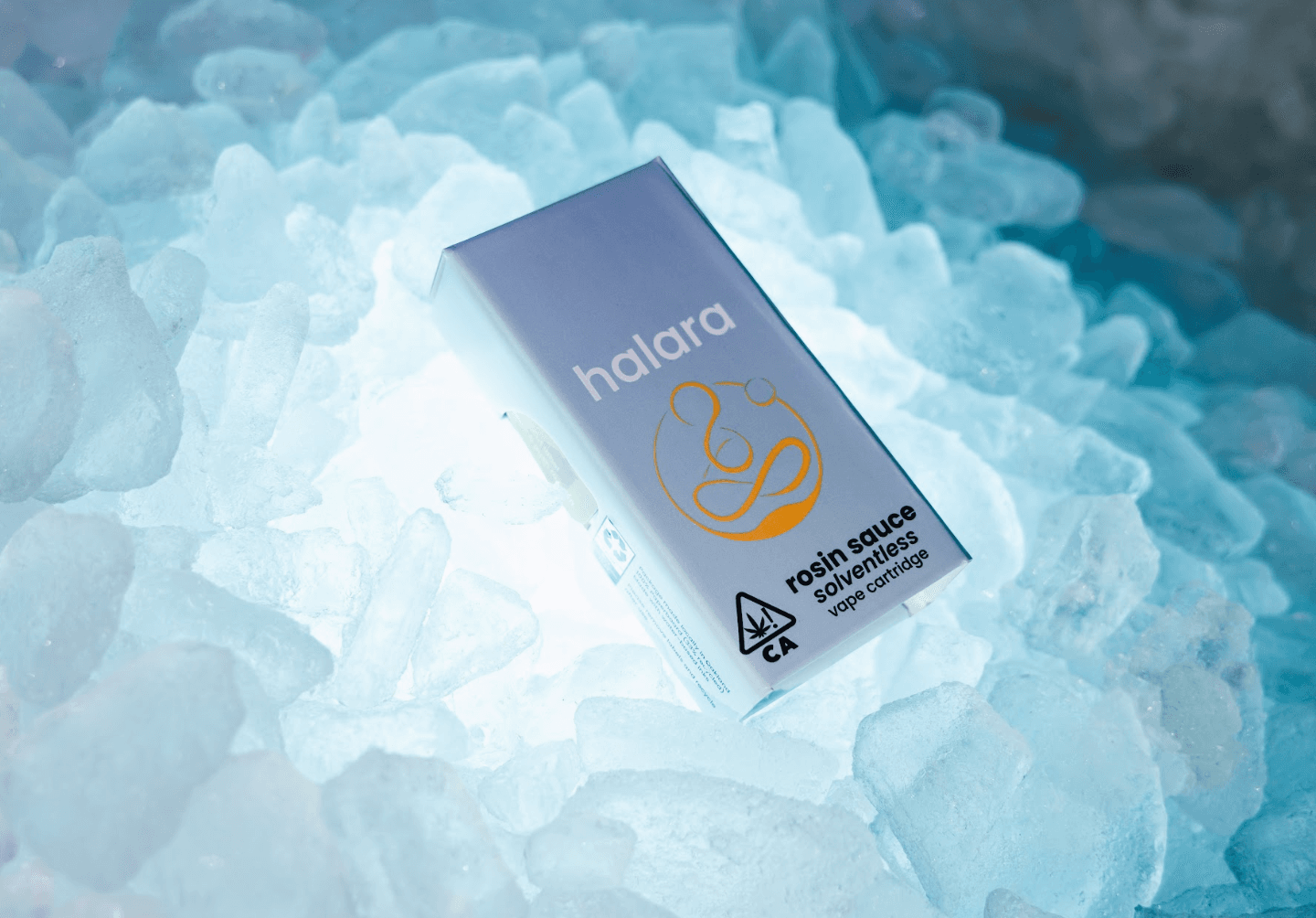
Our solventless line is whole-plant live rosin pressed in California. Single-strain. No additives. No cutting agents. The carts are built on glass tanks with ceramic coils because that's what the oil needs to actually deliver what it's supposed to. Every batch has a full COA published.
Nick personally reviews every strain before it goes into a cart. If something doesn't taste like it should, it doesn't ship. That's slower than the alternative, and it's why our solventless menu is smaller than our distillate menu. We'd rather have ten great rosin strains than thirty mediocre ones.
The current sativa standout is Sour Gummiez, our first sativa in the solventless lineup. Tart fruit candy on the front end, sharp diesel on the back. 79% THC, all-original terpene profile, the kind of thing live rosin is supposed to be. Worth tasting if you've never had real solventless before. You can find Halara at a dispensary near you in California, Washington, and New York.
Taste the flower. Don't just smoke it.
Frequently Asked Questions
Is live rosin stronger than live resin?
Not meaningfully. Both typically test in the 70-85% THC range. The actual experience often feels different (live rosin tends to feel cleaner and more flavor-forward, live resin sometimes feels punchier on the front end), but the cannabinoid math is similar. The bigger differences are flavor, process, and price, not raw potency.
Is live rosin worth the price?
If you specifically want the cleanest, most flavor-forward version of cannabis concentrate that exists, yes. If you want clean, predictable, affordable hits and don't notice subtle terpene differences, distillate or live resin will give you most of what you need at a much lower price. The premium isn't a scam. It's just not always the right product for the moment.
Why is my live rosin cart clogging?
Pure live rosin is more viscous than distillate, so it requires hardware specifically built for it (typically glass tanks with ceramic coils and proper wick porosity). If your cart is clogging often, the most likely causes are temperature (live rosin doesn't like cold environments), low battery power (the atomizer isn't getting hot enough), or, more commonly, a cart that wasn't designed for the oil inside it. Pre-warm the cart by holding the device in your hand for a minute before pulling, and consider using a higher-quality device.
Does live rosin get you higher than distillate?
Distillate has higher raw THC content (often 90%+ vs 70-85% for live rosin), so on a pure-potency basis distillate wins. But live rosin contains the original terpene profile and minor cannabinoids, which can produce a different and often more dimensional effect at lower THC numbers. Many consumers report that live rosin "feels stronger" even though the THC math says otherwise. That's the entourage effect doing real work.
How long does live rosin last?
Stored properly (cold, sealed, dark), live rosin can hold its terpene profile for six months or more. Stored badly (warm, exposed to air, in light), the volatile terpenes can start fading within weeks. The cannabinoids stay stable longer than the terpenes do, but flavor is half the point of live rosin, so storage matters.
Is live rosin legal everywhere cannabis is legal?
Yes, in legal-cannabis states, licensed live rosin is sold the same way any other concentrate is sold. It's worth confirming that whatever you're buying came through the legal market and has a published COA. The grey market sells "live rosin" too, and there are no rules about what's in those products.
The Bottom Line
Live rosin is for people who want the cleanest, most flavor-forward version of cannabis concentrate that exists. The trade-off is that it costs more and there's less of it to go around.
If you've never had real live rosin in a cart, the difference from distillate is immediate. The flavor is louder, the experience is more dimensional, and you can usually feel the strain-specific effects in a way that distillate flattens out.
It isn't the right product for every moment. Distillate has its place when you want clean, predictable, affordable hits. Live resin sits in the middle for people who want fresh-frozen flavor without the solventless premium. But if you care about what cannabis is actually supposed to taste like, live rosin is the lane.
Taste the flower. Don't just smoke it.
Sources
- Cryocure: Live Rosin Processor's Guide. Industry technical reference on the live rosin extraction process.
- Hydrobuilder Learning Center: How to Make Live Rosin. Step-by-step solventless extraction guide with temperature and pressure parameters.
- MUV: Live Ice Water Extract Rosin. Background on ice water hash extraction and trichome capture rates.
- Root Sciences: What Is Solventless Live Rosin. Process overview from a commercial extraction equipment manufacturer.
- Journal of Cannabis Research (PubMed). Research on terpene degradation during cannabis drying and storage.
- Halara Lab Results. Batch-specific COAs for every Halara solventless product.
- What Is Rosin?. Our guide to the broader rosin category.
- What Is Live Resin?. The hydrocarbon-extracted sibling concentrate.
- Resin Sauce vs. Live Resin vs. Rosin. The full concentrate comparison.
- Why Most Rosin Vapes Aren't What You Think. Why labeling matters in the solventless cart category.
- How Nick Makes a Rosin Cart. The QC and process work behind a single solventless AIO.
Related Strains
Want more cannabis intel?
Join The Dealers Diary — weekly strain spotlights, industry news, and insider access.
Subscribe Free