Vaping vs. Smoking Cannabis: What the Science Actually Says
A Study Dropped. 99% Fewer Harmful Byproducts.
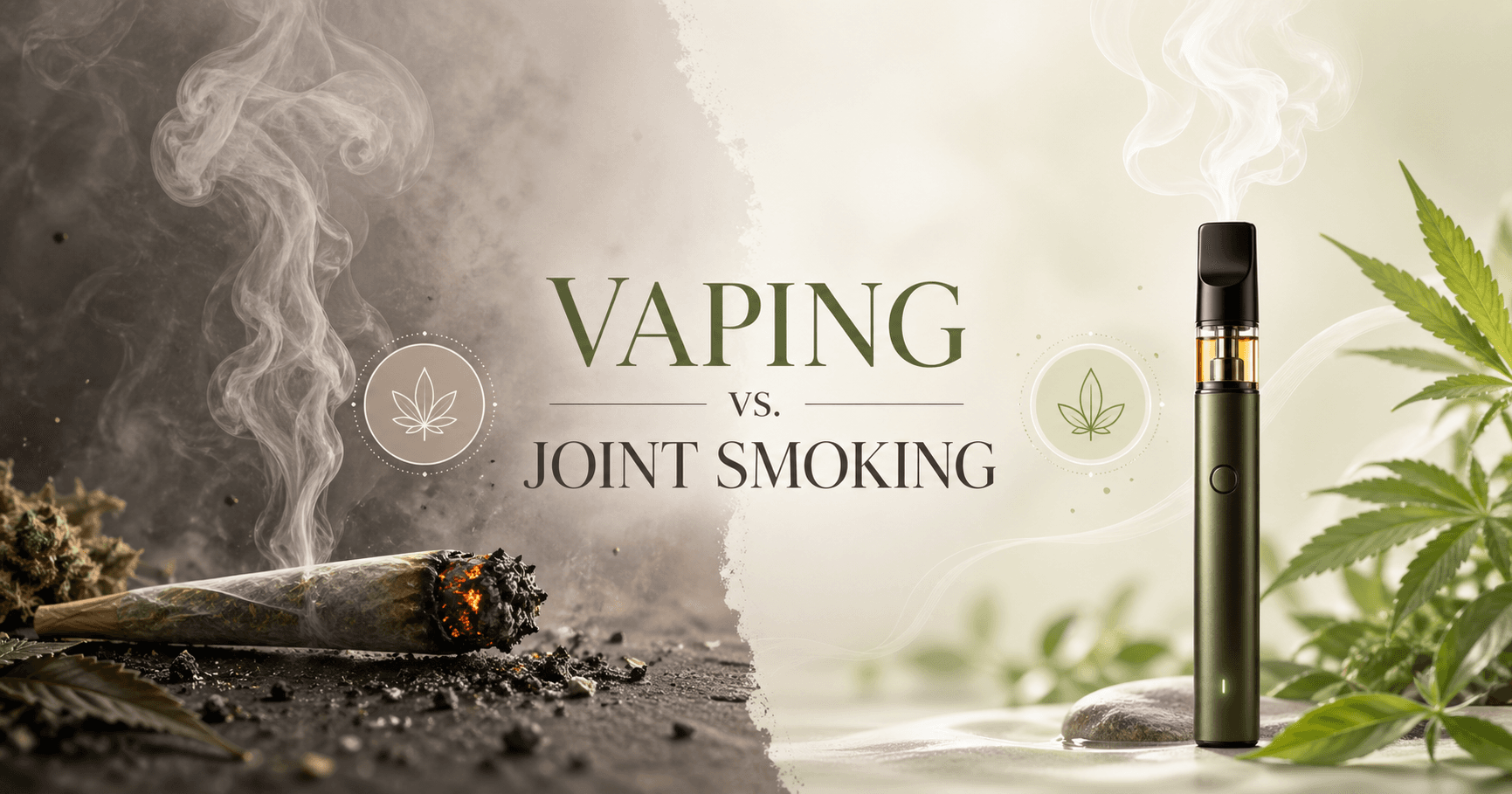
A new study made the rounds recently with a headline that's hard to ignore: vaporizing cannabis reduces harmful inhaled byproducts by up to 99% compared to smoking a joint.
That's a significant number. And the underlying finding — that vaporization produces dramatically fewer harmful compounds than combustion — holds up even when you dig into the details. But there's one thing worth knowing before you take it at face value.
The study was conducted by PAX, the vape hardware company. Self-published. No peer review. PAX makes devices that compete with joints.
I'm not saying they manipulated the data. The science of combustion vs. vaporization is well-established, and the general direction of their findings is consistent with independent research going back years. But when a company publishes research that makes their products look great, that context matters. You should know where the finding came from before you repeat it.
So here's what the study actually showed, what independent science backs up, and what it means for people who vape cannabis.
What the Study Actually Measured
PAX researchers tested 16 harmful or potentially harmful compounds — things like benzene, formaldehyde, and acetaldehyde — across three consumption methods using the same cannabis samples. They compared joints (combusted) against PAX's dry herb vaporizer and an oil vape device.
The key finding: across those 16 compounds, vaporization dramatically reduced the presence of harmful byproducts compared to smoking. The "up to 99%" number represents the most extreme reduction in specific compounds. The average across all 16 was substantially lower for vaping in both testing conditions.
This is useful data. The methodology — controlled conditions, matched samples, specific compound tracking — is reasonable. The limitation is that it was designed and run by the company with the most to gain from the result.
The Science They're Building On
Here's where things get more solid.
Combustion is a chemical process that happens when you set something on fire. It doesn't just heat the plant material — it destroys it, breaking molecular bonds and creating entirely new compounds in the process. Many of those new compounds are known carcinogens: benzene, polycyclic aromatic hydrocarbons, carbon monoxide, tar. None of these come from cannabis itself. They come from burning it.
Vaporization works differently. Instead of burning the material, it heats it below the combustion threshold, releasing the active compounds (cannabinoids, terpenes) as vapor without triggering combustion. According to published research on cannabis vaporization chemistry, THC begins vaporizing at around 157°C and most cannabinoids and terpenes are fully released by 220°C — well below the 900°C+ temperatures of a lit joint. The chemical byproducts of fire don't have a chance to form.
This is not controversial science. It's the same reason hospitals use nebulizers instead of burning herbs. Heat plus inhalation can be fine; combustion plus inhalation is where problems begin.
A 2007 study published in the Journal of Psychoactive Drugs — funded by MAPS, not a vape company — found that vaporization reduced carbon monoxide and other toxins compared to smoking, without meaningfully changing the delivery of THC. A 2025 airway health study from UC Davis found that metabolites associated with combustion products were significantly higher in smokers than vapers, and that tobacco smoke caused the most inflammation and oxidative stress of any consumption method tested.
So PAX didn't invent this finding. They ran a more detailed measurement of something the scientific community has understood directionally for nearly two decades. The 99% number is new. The basic principle isn't.
Smoking vs. Vaping: What's Actually Different
To make this concrete, here's what happens in each case.
When you smoke a joint:
- The plant material combusts at temperatures exceeding 900°C
- Combustion produces smoke containing hundreds of compounds, many of which aren't in cannabis at all
- You inhale that smoke directly, including tar and particulate matter
- The active compounds (THC, CBD, terpenes) ride along, but so does everything else combustion creates
When you vaporize cannabis:
- The material or oil is heated below combustion threshold (typically 180–220°C for dry herb, varies for oil)
- Active compounds are released as vapor without triggering the chemical cascade of combustion
- The byproduct profile changes dramatically, eliminating most of the combustion-derived compounds
- You still inhale something, but the composition of that something is fundamentally different
This doesn't mean vaping is without any risk. Heating oil at high temperatures still produces some byproducts, particularly if the hardware or oil quality is poor. But the comparison to combustion isn't close.
The Hardware Question
Here's where the conversation gets more nuanced for oil vapes specifically.
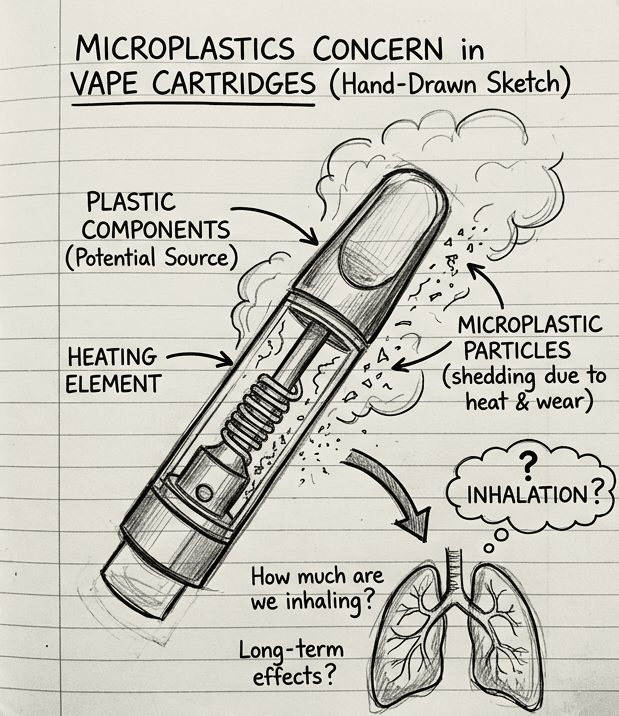
The PAX study tested both dry herb vaporizers and oil cartridges, but not all oil vapes are the same. The compounds you inhale from a vape cartridge depend on more than just the temperature — they depend on what the oil is made of, what the cartridge itself is made of, and how hot the device runs.
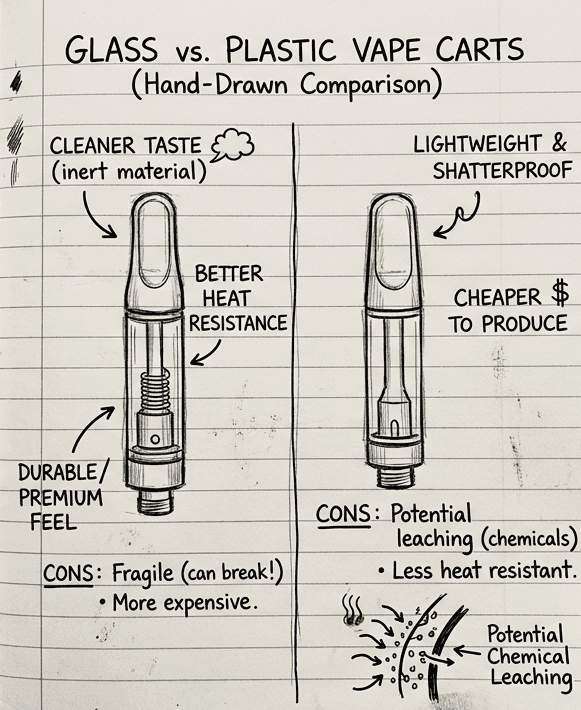
We've written about this in detail elsewhere, but the short version: glass tanks and ceramic coils produce a cleaner vapor profile than plastic tanks and metal coils, because the heating element and oil container materials affect what ends up in the vapor. A cartridge made of plastic heated to vaporization temperatures is a different situation than the same oil in a glass tank with a ceramic coil. (If you want to know how to tell the difference at a dispensary counter, the microplastics article covers that.)
The 99% reduction finding applies to a controlled vaporization setup with quality hardware. An off-brand cartridge running at the wrong temperature with questionable materials may not match those numbers.
So the honest answer is: vaporization is significantly cleaner than combustion at the baseline, but the quality of your hardware still matters.
The EVALI Lesson
If you were buying legal cannabis in 2019, you might remember the vaping lung injury outbreak that made national news. The CDC recorded 2,807 hospitalizations and 68 deaths between mid-2019 and early 2020, all linked to vaping.
The culprit wasn't vaping itself. It was vitamin E acetate — an oily additive used as a cutting agent in illicit THC cartridges to bulk up the oil cheaply. When inhaled, it coats the lungs in a way that triggers serious injury. A landmark NEJM study found vitamin E acetate in the lung fluid of 48 out of 51 EVALI patients tested.
Almost all EVALI cases were traced to products from informal sources — unlicensed dealers, unregulated grey market carts. Licensed dispensary products aren't formulated with vitamin E acetate because California's testing requirements would catch it. That's the practical difference between a product with a clean COA and one without any testing at all.
The EVALI outbreak didn't disprove the safety case for quality vaping. It proved what happens when you remove quality controls entirely. The California recall database exists precisely to surface licensed products that still slip through — and it's worth knowing how to read it.
What This Means in Practice
If you're deciding between smoking and vaping for health reasons, the science is fairly consistent on the general direction: vaporization produces fewer harmful byproducts than combustion. That's true whether you trust PAX or the independent research that preceded them.
But vaping isn't a single category. It covers dry herb vaporizers, high-end oil vapes, cheap plastic cartridges, and everything in between. The benefit is real, but it's realized through quality hardware and clean oil — not just by avoiding a lighter.
The questions worth asking when you pick up a vape cart:
- Glass or plastic tank? Glass doesn't leach into the oil when heated.
- Ceramic or metal coil? Ceramic produces cleaner vapor.
- What's in the oil? Live resin and rosin start from cleaner input material than distillate with added terpenes.
- Full panel COA? Pesticides, heavy metals, residual solvents — the lab results tell you what's actually in the product.
- Licensed and tested? EVALI was almost entirely an illicit market problem. Buy from dispensaries, not the grey market.
What We Do at Halara
Since we're in the vape business and just made an argument about hardware quality, it's worth saying what we use: glass tanks, ceramic coils, and clean oil (live resin, rosin, and distillate, clearly labeled). No cutting agents. Full COA results for every batch are available on our lab results page.
We're not anti-joint. Some of the best growers we know roll their own. But if you're choosing a vape cartridge, hardware quality is part of the calculation, and we think it's worth being transparent about how ours is built.
Frequently Asked Questions
Is vaping cannabis healthier than smoking it?
The evidence suggests vaping produces significantly fewer harmful combustion byproducts than smoking. The CDC, independent researchers, and — yes — the PAX study all point in the same direction. The caveat is that "vaping" isn't one thing. Quality hardware and tested oil matter. A cheap, unregulated cart is a different product than a licensed, lab-tested vape from a glass-and-ceramic device.
Does vaping weed smell less than smoking?
Yes, substantially. Combustion creates the persistent, heavy cannabis odor because you're burning plant matter and releasing smoke. Vaporization releases vapor that dissipates much faster and smells less intensely. It's not odorless, but the difference is noticeable.
What was EVALI, and should I be worried about it?
EVALI was a 2019-2020 lung injury outbreak linked to vaping — specifically to vitamin E acetate used as a cutting agent in illicit, untested THC cartridges. The outbreak affected people using grey market and unlicensed products. If you're buying from a licensed California dispensary and checking COA results, you're not in the risk profile that drove those cases.
Can vaping cannabis still damage your lungs?
Honest answer: research is still developing, and vaping isn't zero-risk. The 2025 UC Davis study found vaping produced fewer inflammatory markers than smoking, but the long-term effects of decades of cannabis vaping specifically haven't been studied. What the research does show clearly is that removing combustion removes a major source of known toxins. Quality hardware and clean oil reduce additional risk factors.
What's the difference between dry herb vaping and oil vaping?
A dry herb vaporizer heats the actual cannabis flower below combustion. An oil vape cartridge heats a concentrated extract. Both avoid combustion, but they involve different input materials, temperatures, and hardware. The PAX study tested both. The general principle — vaporization vs. combustion — applies to both, but oil cart quality varies enormously depending on the extraction process and hardware.
The Bottom Line
The PAX study is worth taking seriously, with appropriate skepticism about the source. The 99% number comes from a company with a financial stake in the result. But the underlying science — combustion creates far more harmful byproducts than vaporization — is well-established and not something PAX invented.
If you vape instead of smoking, you're likely inhaling fewer harmful combustion byproducts. If you're going to vape, the quality of your hardware and oil affects how much of that benefit you actually get. And if you're buying from the grey market without COA results, you're adding risk the licensed market has largely solved.
That's the whole story.
Sources
- Marijuana Moment: Vaporizing Marijuana Reduces Harmful Inhaled Byproducts By 99%. The PAX study coverage.
- Abrams et al. (2007), Journal of Psychoactive Drugs. Independent research on vaporization and reduced toxin exposure.
- PMC: Vapor Pressure and Vaporization in Cannabis (2023). Research on cannabinoid and terpene vaporization temperatures.
- UC Davis Health (2025): How Smoking, Vaping, and Marijuana Affect Airway Health. Recent airway health study comparing combustion and vaping.
- CDC: EVALI Outbreak Overview. 2,807 hospitalizations, 68 deaths linked to vitamin E acetate in illicit THC carts.
- NEJM: Vitamin E Acetate in EVALI Patients (2019). Landmark study identifying vitamin E acetate in lung fluid of EVALI patients.
- California DCC Recall Portal. Public database of all cannabis product recalls.
- Halara Lab Results. Batch-specific COAs for all Halara products.
- Microplastics in Vape Cartridges. Our breakdown of tank materials and what they mean.
- Glass vs. Plastic Vape Cartridges. Why the cartridge material matters.
Want more cannabis intel?
Join The Dealers Diary — weekly strain spotlights, industry news, and insider access.
Subscribe Free